Eaves And Trim
Rust shows up first along the bottom panel ends, where gutters overflow and snowmelt sits. We look for thin paint at the drip edge, split gutter seams, and loose eave trim.

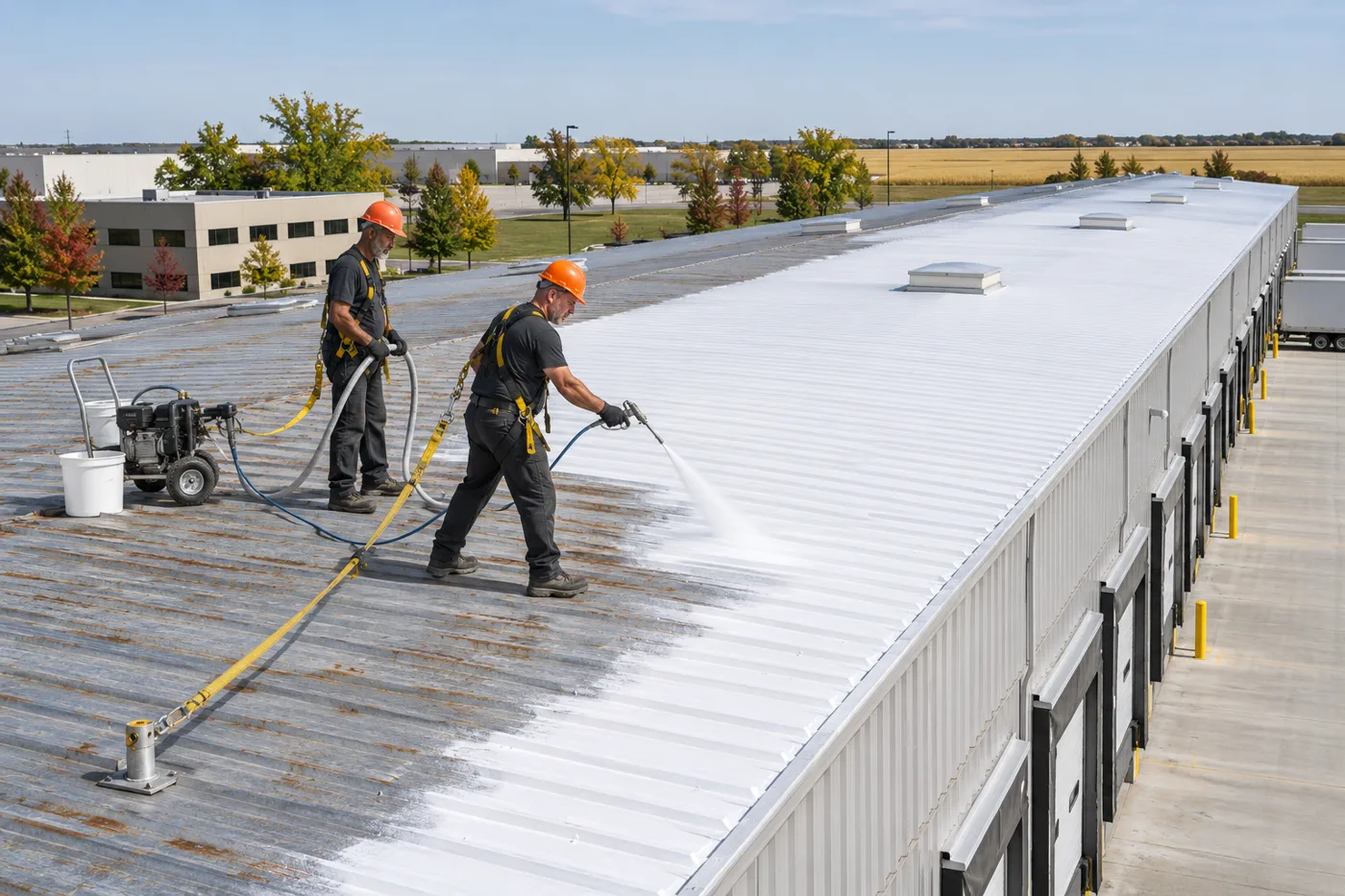
As a Plainfield metal roof coating contractor, we fix loose screws, open laps, and rust on commercial steel roofs, then coat them with the panels left in place.
Plainfield metal roof coating jobs start with the same five parts of the roof. Each one gets checked before we pick a coating or write a number.
Rust shows up first along the bottom panel ends, where gutters overflow and snowmelt sits. We look for thin paint at the drip edge, split gutter seams, and loose eave trim.
Panels grow in July heat and shrink on January nights, and the laps slowly open. Dark streaks below a lap and loose stitch screws mean water is getting under the overlap.
A big warehouse roof carries thousands of exposed screws, and every rubber washer hardens with age. We pull-test sample rows and count stripped or backed-out screws.
Rooftop units, exhaust fans, and pipe boots collect layers of caulk from different trades over the years. Split sealant at curb corners is a common leak on office and retail roofs.
Additions with less pitch and sagging purlins hold rain long after a storm. Dirt rings on the panel flats show where water sits, which changes the coating that goes there.
Five coating services cover the steel, flat, foam, and shingle roofs on commercial buildings around Plainfield. Each card lists where water usually gets in on that roof.
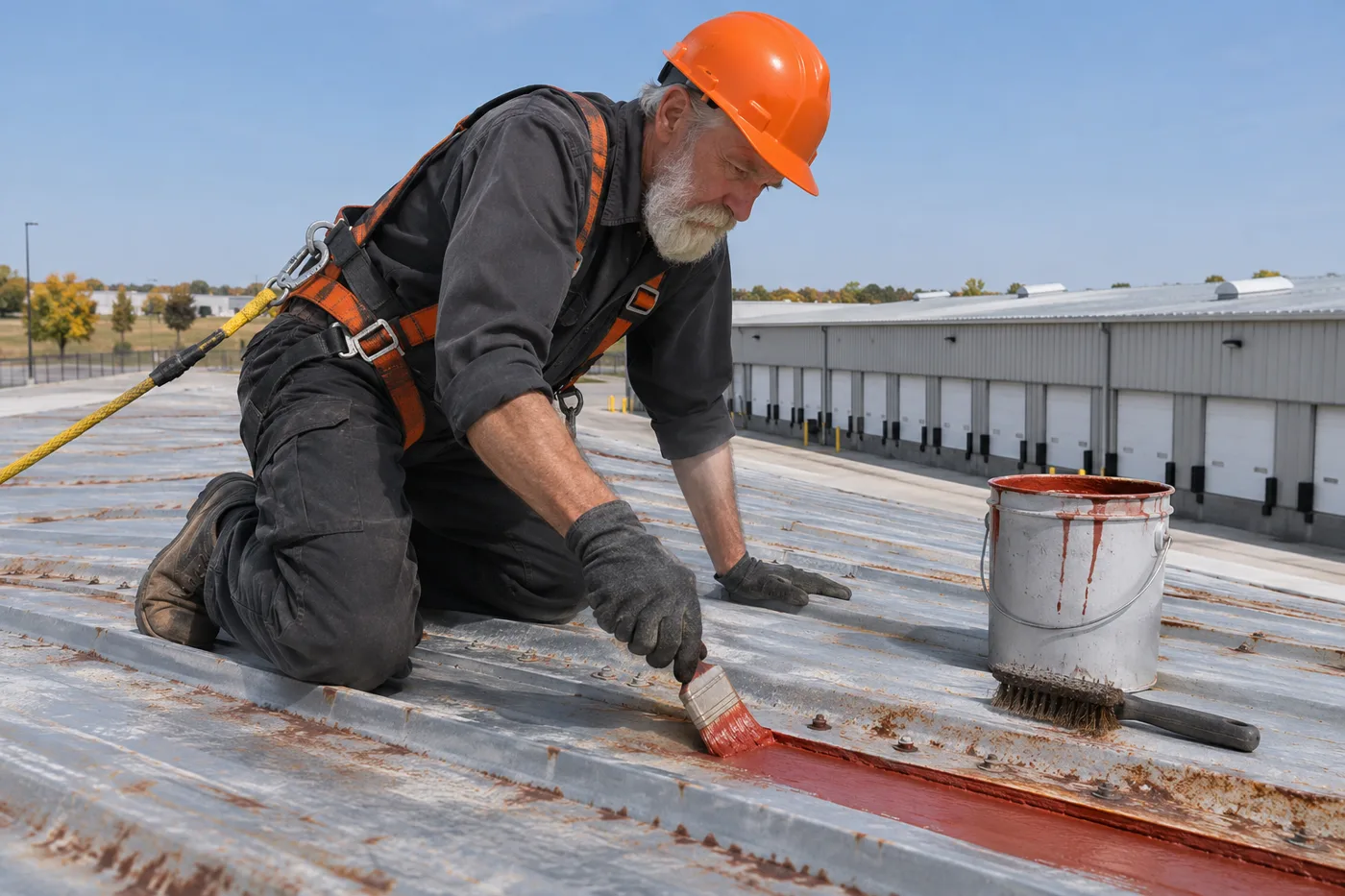
The full restoration for exposed-fastener steel: wash, prime the rust, seal every screw and lap, then build base and top coats across the field.
Where Water Gets In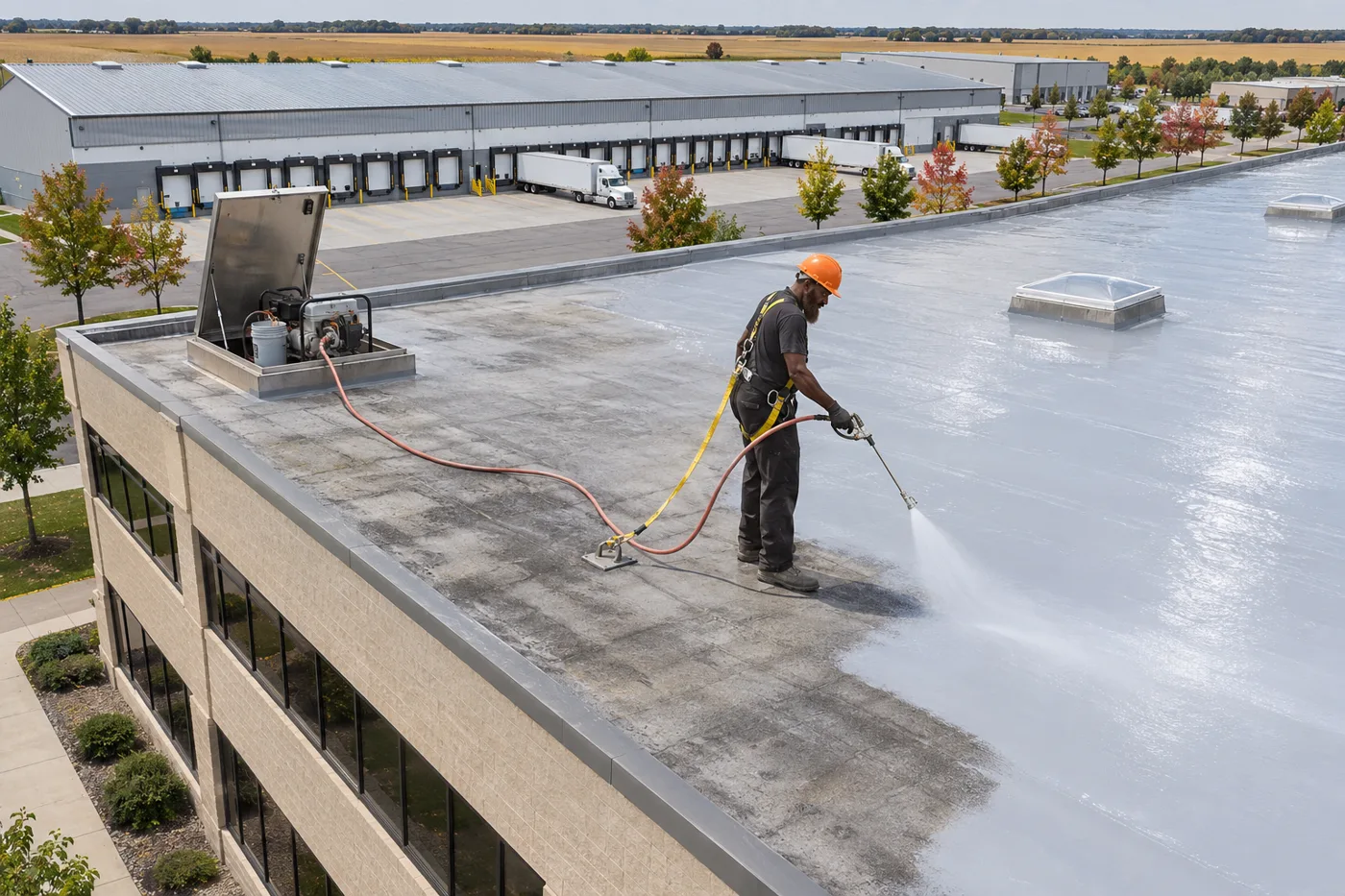
A moisture-cured coating for low-slope metal and flat sections where rain lingers, common on the long logistics roofs off the interstate.
Where Water Gets In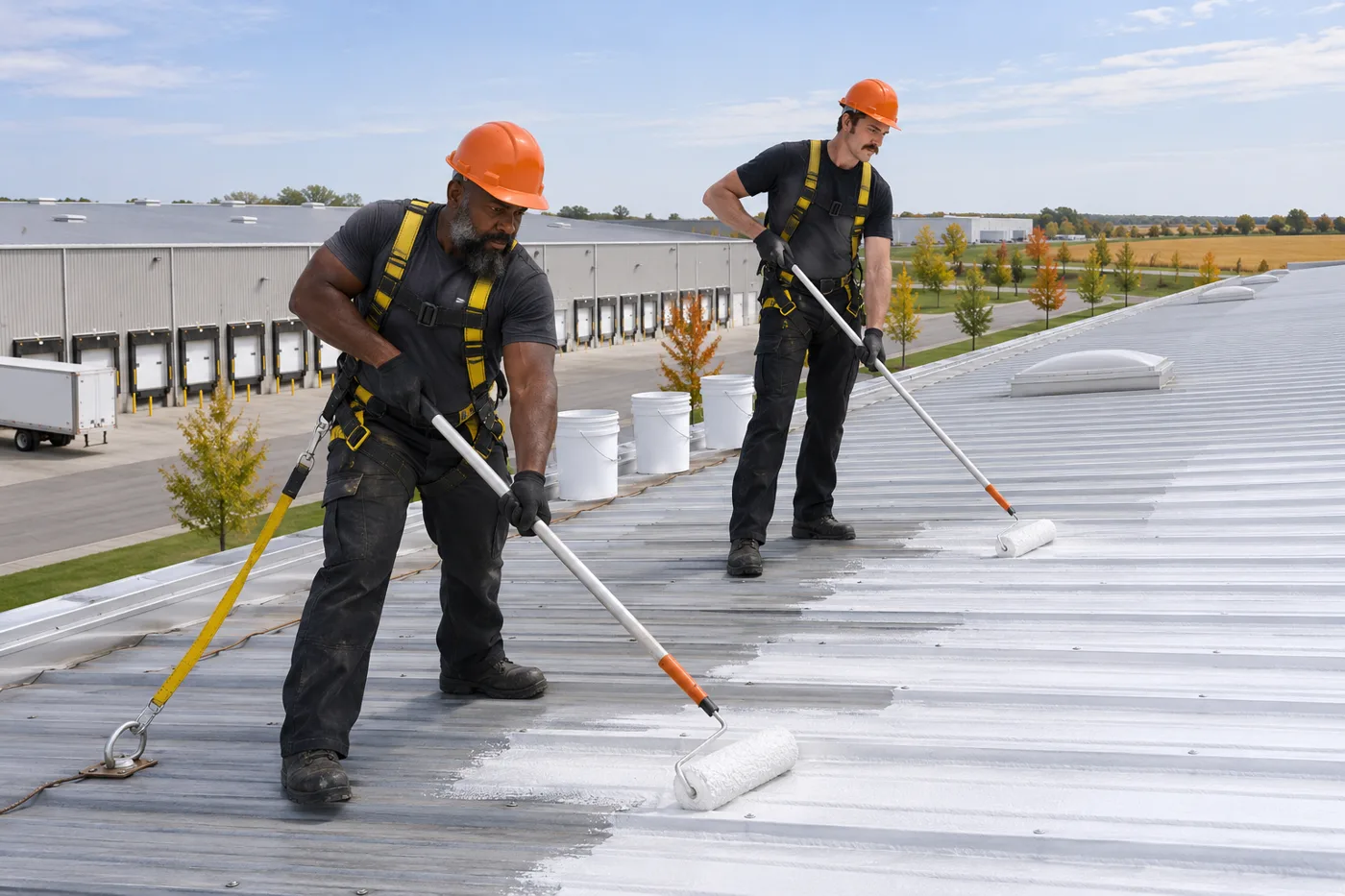
Water-based coats for pitched metal panels that shed rain fast, rolled or sprayed on warm, dry days so each coat can set.
Where Water Gets In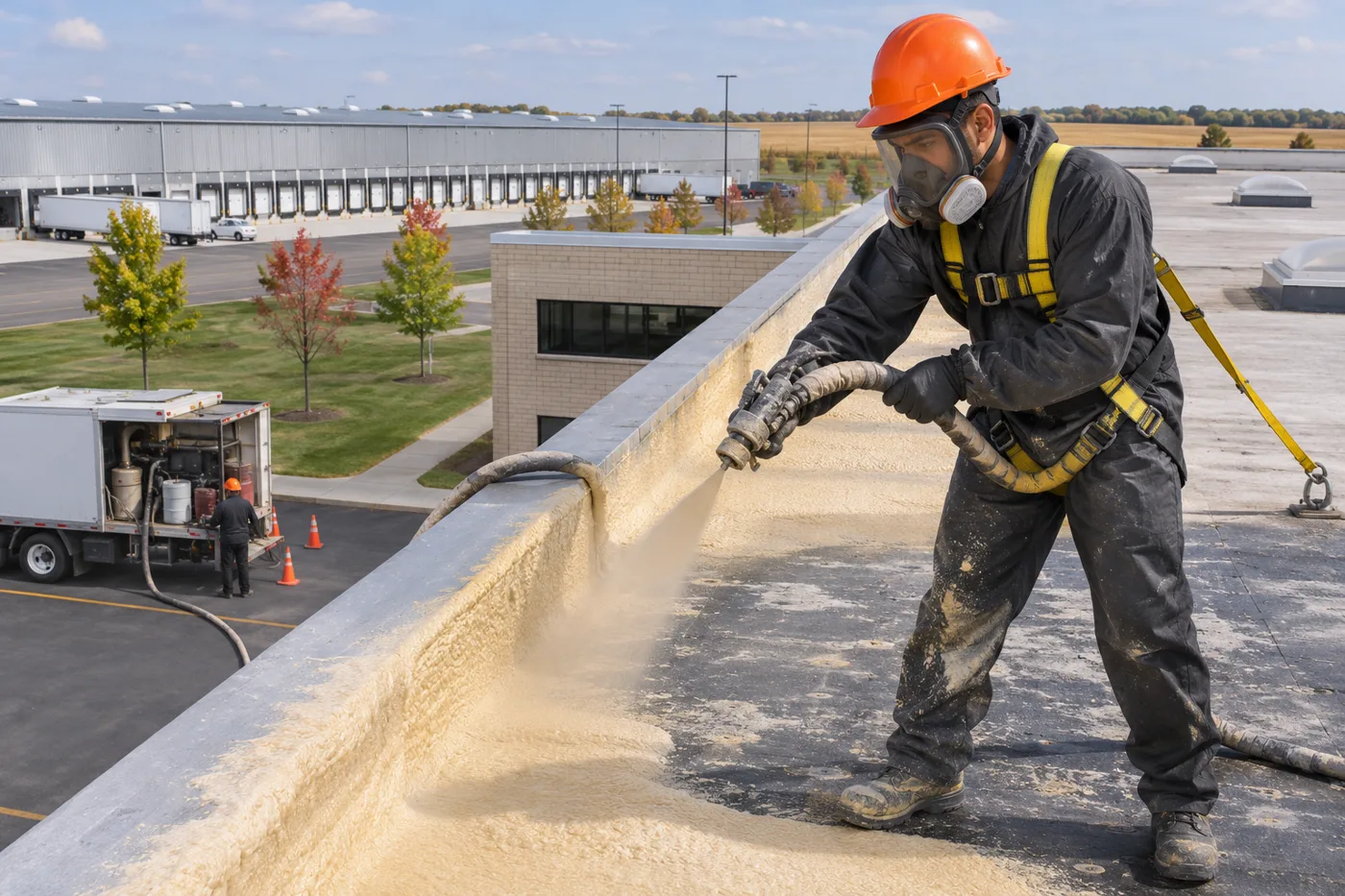
Closed-cell foam sprayed over the panels to fill the ribs, add insulation, and shed water, then finished with a protective topcoat.
Where Water Gets In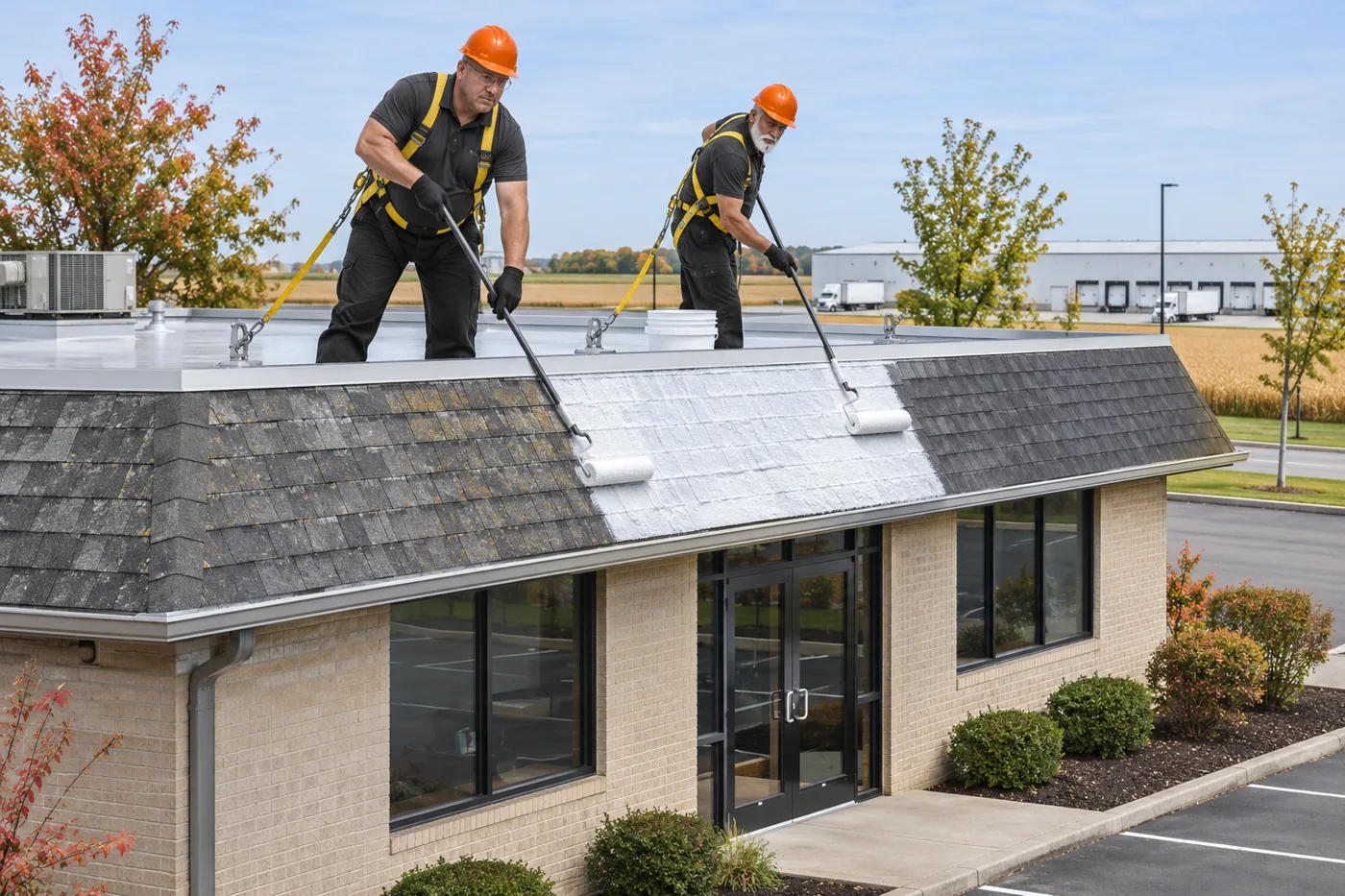
A breathable coating for asphalt shingle roofs on offices and churches while the tabs still lie flat and the deck is firm.
Where Water Gets InCall and tell us where the water shows up inside. We set up a roof walk, find the opening, and price the repair before anyone talks about coating.
Every job follows the same order, from the first roof walk to the final check. Coating is the fourth step, after the leaks are closed.
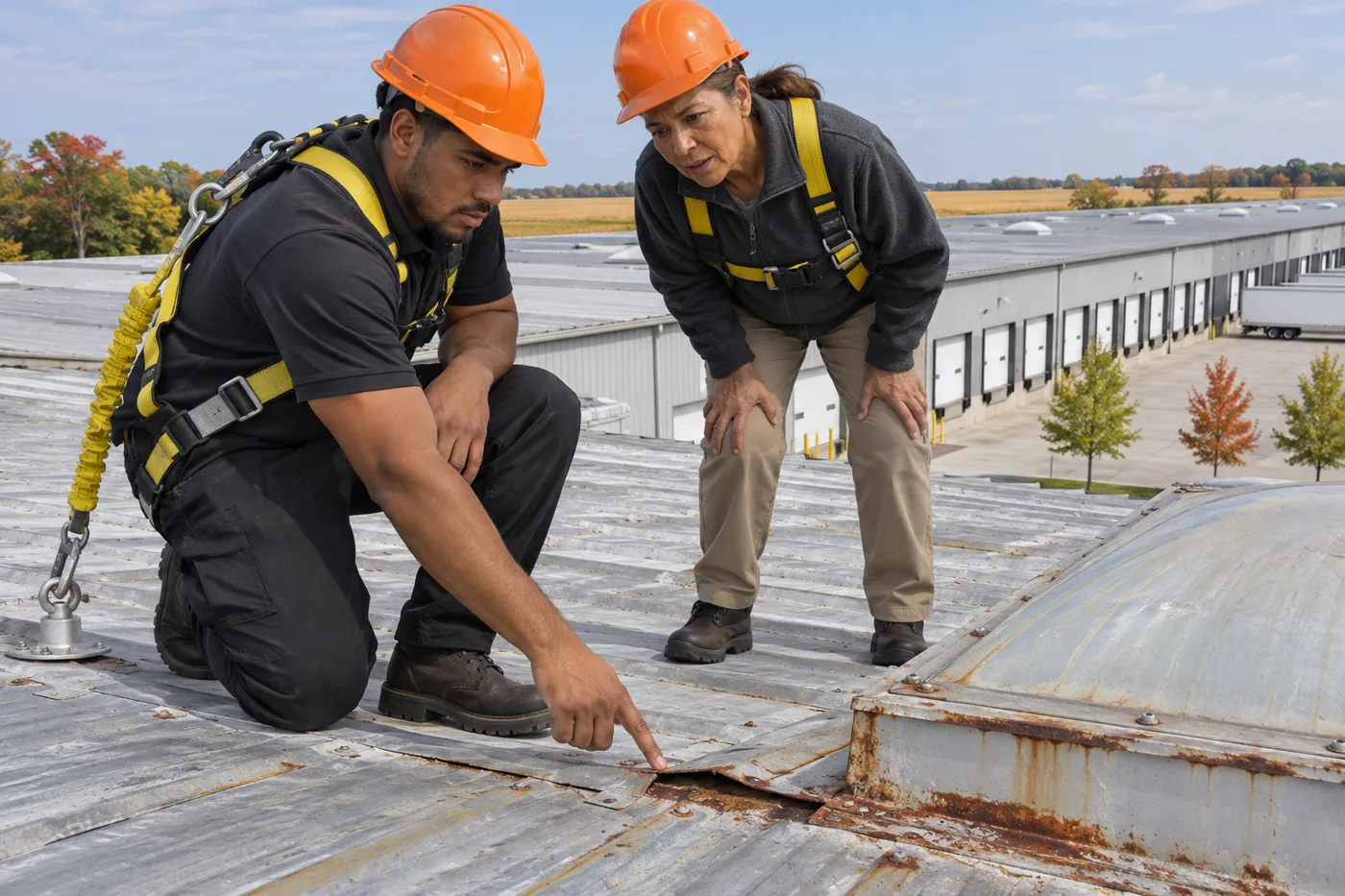
We walk every panel run, pull-test screw rows, check lap sealant, and probe soft areas around curbs and drains. You get photos of each problem with its spot on the roof marked.
Backed-out screws are replaced with larger ones, rusted-through panels are swapped, and open laps are stitched and sealed. The coating goes over a closed roof.
A pressure wash removes chalk, dirt, and diesel film from truck traffic. Rusty steel gets a rust-inhibiting primer, and every lap and screw head gets a reinforced base coat.
Base and top coats go on in measured passes to the thickness on the product sheet. We gauge wet film as we go instead of counting passes.
Before the crew leaves, we walk the roof with you, take thickness readings, and point out anything to watch, like a gutter that clogs or a purlin that sags.
Find the row that looks like your roof. The dots show how often each path fits that condition; the roof walk settles it.
| What You See On The Roof | Coat The Roof | Repair, Then Coat | Replace Panels First |
|---|---|---|---|
| Chalky, faded paint over tight panels | Usually Fits | Sometimes | Rarely |
| Drips lined up with screw rows | Sometimes | Usually Fits | Rarely |
| Surface rust at laps and eaves | Sometimes | Usually Fits | Sometimes |
| Water standing on a flatter addition | Sometimes | Usually Fits | Sometimes |
| Rust holes across many panels | Rarely | Sometimes | Usually Fits |
| Sagging purlins or a soft deck | Rarely | Rarely | Usually Fits |
Coating keeps the steel you already own and seals the joints that leak. Here is how it compares with tearing the roof off.
| Factor | Coating The Roof | Tearing Off And Replacing |
|---|---|---|
| Work Over The Building | Crews work from the roof surface, so racking, docks, and offices below stay in use. | Panels come off, so the space below needs protection and often a pause. |
| Existing Panels | Stay in place, cleaned, primed, and sealed at every lap and screw. | Torn off, hauled away, and replaced with new steel. |
| Published Price Range | About $2.50 to $4.00 per square foot. | About $5 to $8 per square foot. |
| Roof Surface | A white topcoat reflects summer sun off the steel. | New painted panels in a color from the maker's line. |
| Later Upkeep | A recoat over the same system once the film wears thin. | Screw checks and sealant work as the new panels age. |
| Best Match | Solid steel with leaks at screws, laps, and edges. | Steel rusted through in wide areas, or a sagging roof. |
We take metal roof coating work in Plainfield and five towns around it. Building outside them? call us or send us a message.
Warehouses, shops, and light industrial buildings, coated in sections so each part of the roof is sealed before the crew leaves.
Plant roofs under process exhaust get washed, checked for chemical film, and coated with a product that holds up to it.
Farm, ag business, and industrial roofs where exposed screws on every rib make fastener sealing the biggest job.
Short answers to what Plainfield building owners ask most before a roof walk.
Question about your own roof?
Call UsCoating fits when the panels and framing are solid and the leaks come from screws, laps, and surface rust. Replacement fits when panels are rusted through or the roof sags. On the very large warehouse roofs common in Plainfield, coating keeps racking and inventory covered because nothing is torn off.
Usually, yes. Terminal roofs are long, simple runs of steel where water gets in at screws and end laps, and coating seals those joints directly. Crews work from the roof, so doors and docks keep moving. Panels rusted through near the gutters get replaced first, which narrows the value on badly corroded eaves.
We do, around Plainfield and through Hendricks County. Pole barns and farm shops tend to have a screw on every rib and short overhangs, so rust starts at the eaves. We treat those edges first, seal every fastener, and then coat the full roof.
Plan a recoat when the topcoat chalks heavily, wears thin, or shows bare spots, and before the steel underneath starts rusting again. We measure remaining film thickness to time it. A recoat is a much smaller job than the first restoration because the screws and laps are already sealed.
Expect about $2.50 to $4.00 per square foot for coating, against about $5 to $8 per square foot to replace the roof. The final price comes after the roof walk. Roof size, rust treatment, screw replacement, seam work, the coating system, film thickness, and access set where a job lands.
Every freeze and thaw moves the panels, which loosens screws and stretches the sealant at laps. Meltwater that slips into a lap can refreeze and pry it wider. On office buildings this shows up as winter leaks along screw lines and roof edges, and sealing those joints before coating stops most of them.
Send the address and a few details about the roof, or call to set up a roof walk. You get a written scope with the repair work and the coating listed separately.