Panel Ends At The Eave
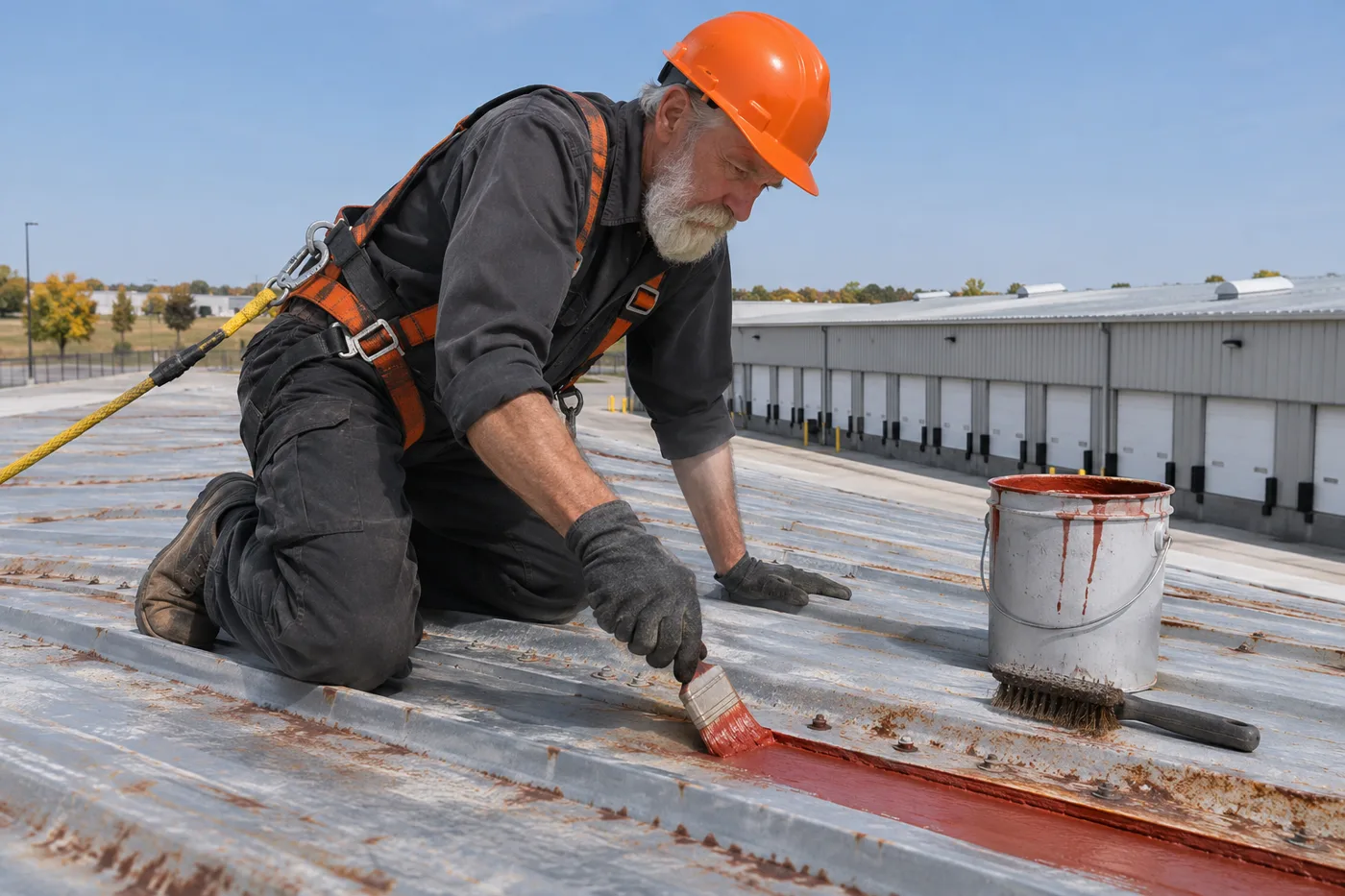
Bottom panel ends sit in gutter splash and snowmelt, so rust usually starts there. We wire-brush scale, prime bare steel, and replace any panel end that crumbles.

As a Plainfield commercial metal roof coating contractor, we restore exposed-fastener and standing-seam steel roofs on warehouses, terminals, and offices without removing a panel.
Plainfield commercial metal roof coating suits most steel roofs that still hold together. Match your roof to a row below.
| What You See On The Roof | Full Coating System | Spot Repairs, Then Coat | New Panels First |
|---|---|---|---|
| Exposed screws with dry, cracked washers | Sometimes | Usually Fits | Rarely |
| Standing seams with tight clips | Usually Fits | Sometimes | Rarely |
| Rust bloom at end laps | Sometimes | Usually Fits | Rarely |
| Pinholes through several panels | Rarely | Usually Fits | Sometimes |
| Panels bent from hail with split laps | Rarely | Sometimes | Usually Fits |
Half dots mark roofs where the system works on some sections; the walk decides which ones and lists them in the scope.
On commercial steel, five areas decide how much prep a roof needs before the first coat.
Bottom panel ends sit in gutter splash and snowmelt, so rust usually starts there. We wire-brush scale, prime bare steel, and replace any panel end that crumbles.
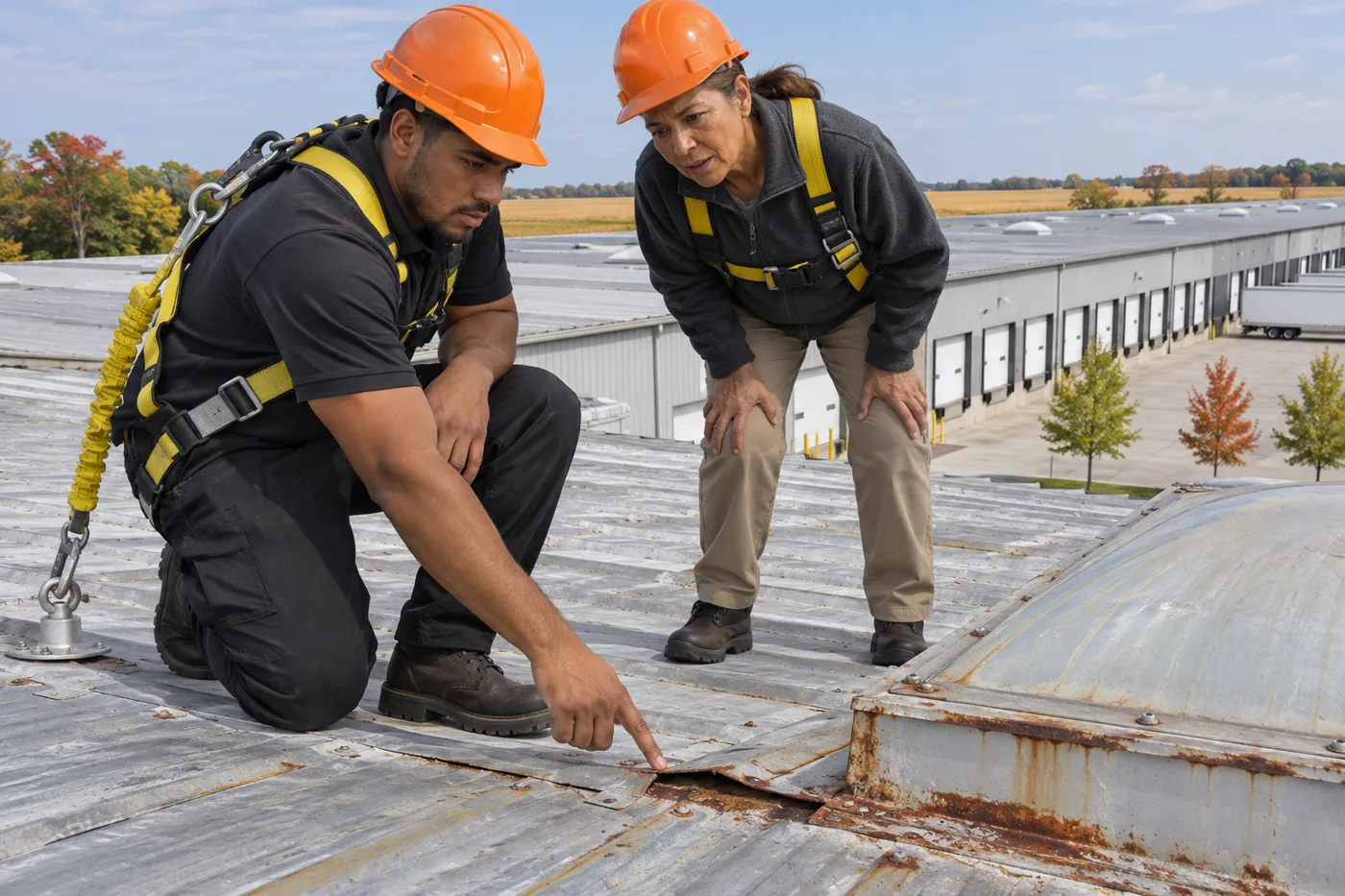
End laps run across the slope and trap water when sealant dries out. We clean each lap, add stitch screws where it gaps, and cover it with reinforced base coat.
Rubber washers crack and screws back out as the panels move. Loose ones are snugged, stripped ones are upsized, and every head gets a dab of sealant.
Unit curbs and exhaust fans break the panel ribs and collect old caulk. We cut out failed sealant, reflash the corners, and fabric-reinforce the joint.
Translucent panels yellow and crack along their laps. Each one is either sealed and coated around, or swapped for a new panel before the coating goes on.
Other coating systems join a metal job when part of the roof calls for them.
Our main system for exposed screws and standing seams.
Added on flat sections where rain sits.
An option on steep panels that drain quickly.
Fills ribs and insulates under a topcoat.
For shingled offices on the same property.
Restoring steel with a coating system keeps the building working while the roof is fixed.
| Factor | Coating The Roof | Tearing Off And Replacing |
|---|---|---|
| Building Use | Warehouses and offices stay open; work happens on top. | Interior exposed while panels are swapped. |
| Steel Kept | Every sound panel stays and gets primed. | All panels hauled off and replaced. |
| Price Range | About $2.50 to $4.00 per square foot. | About $5 to $8 per square foot. |
| Heat In Summer | White topcoat reflects sun off the steel. | Depends on the new panel color. |
| Screws And Laps | Sealed under one continuous film. | New screws and laps start fresh. |
| Skylights | Sealed or replaced, then coated around. | Replaced with the new roof. |
Loose screws let water in at hundreds of holes at once. Call us and we will set up a roof walk to count them and price the fix.
Each stage below finishes before the next one starts, so the coating goes over a clean, closed roof.
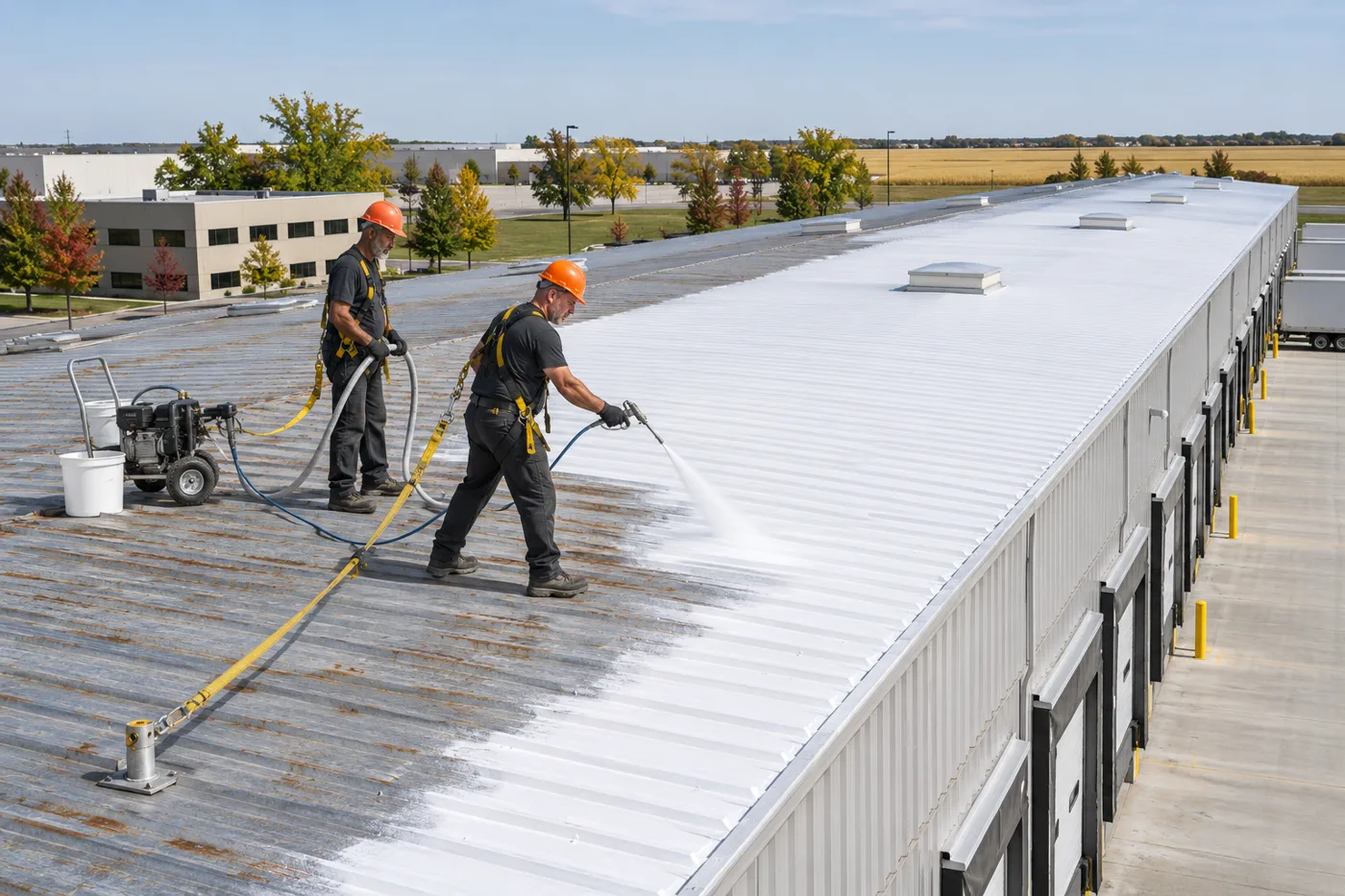
We count failed screws by sample rows, look under every end lap, and test coating adhesion on two or three panels. Hail dents and bent ribs get photographed for your records.
Stripped screws go to the next size up, rusted-through panels are swapped, and curb flashing is rebuilt. Each repair is listed separately from the coating in your scope.
Pressure washing removes chalk and dirt. Rust gets wire-brushed and primed, and laps, screw heads, and curbs get a fabric-reinforced base coat.
Field coats are sprayed or rolled in passes to the dry film thickness on the product sheet. We check wet film with a gauge across the roof.
Before the crew leaves, we take dry film readings across the roof, look over every curb and skylight again, and hand you photos and readings for your building file.
Many Plainfield roofs mix pitched steel with flatter sections or older additions.
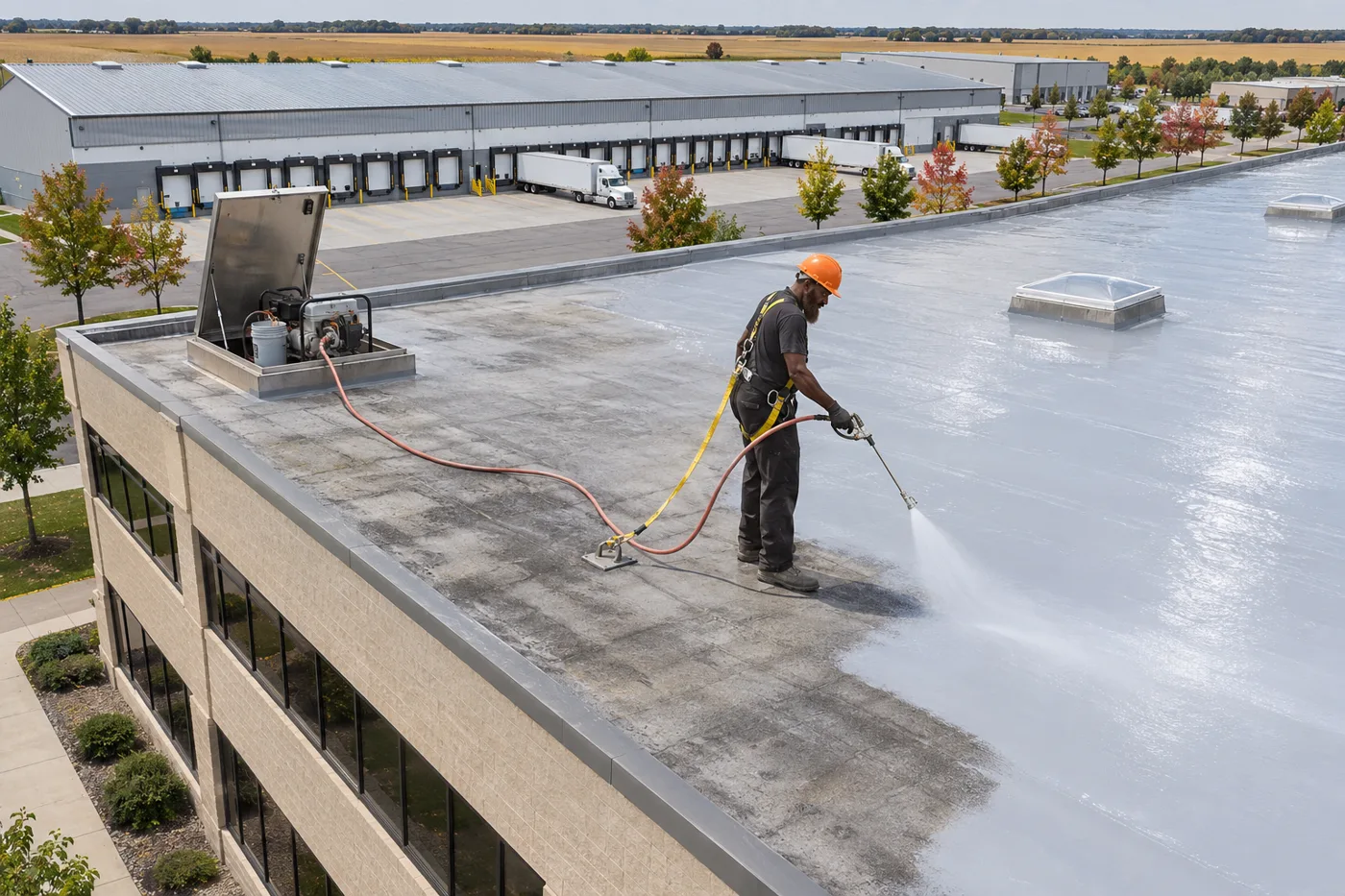
Low-slope additions behind a warehouse often hold water, so silicone goes on those sections while the pitched steel gets the main system. Both systems go in one written scope with their own line items.
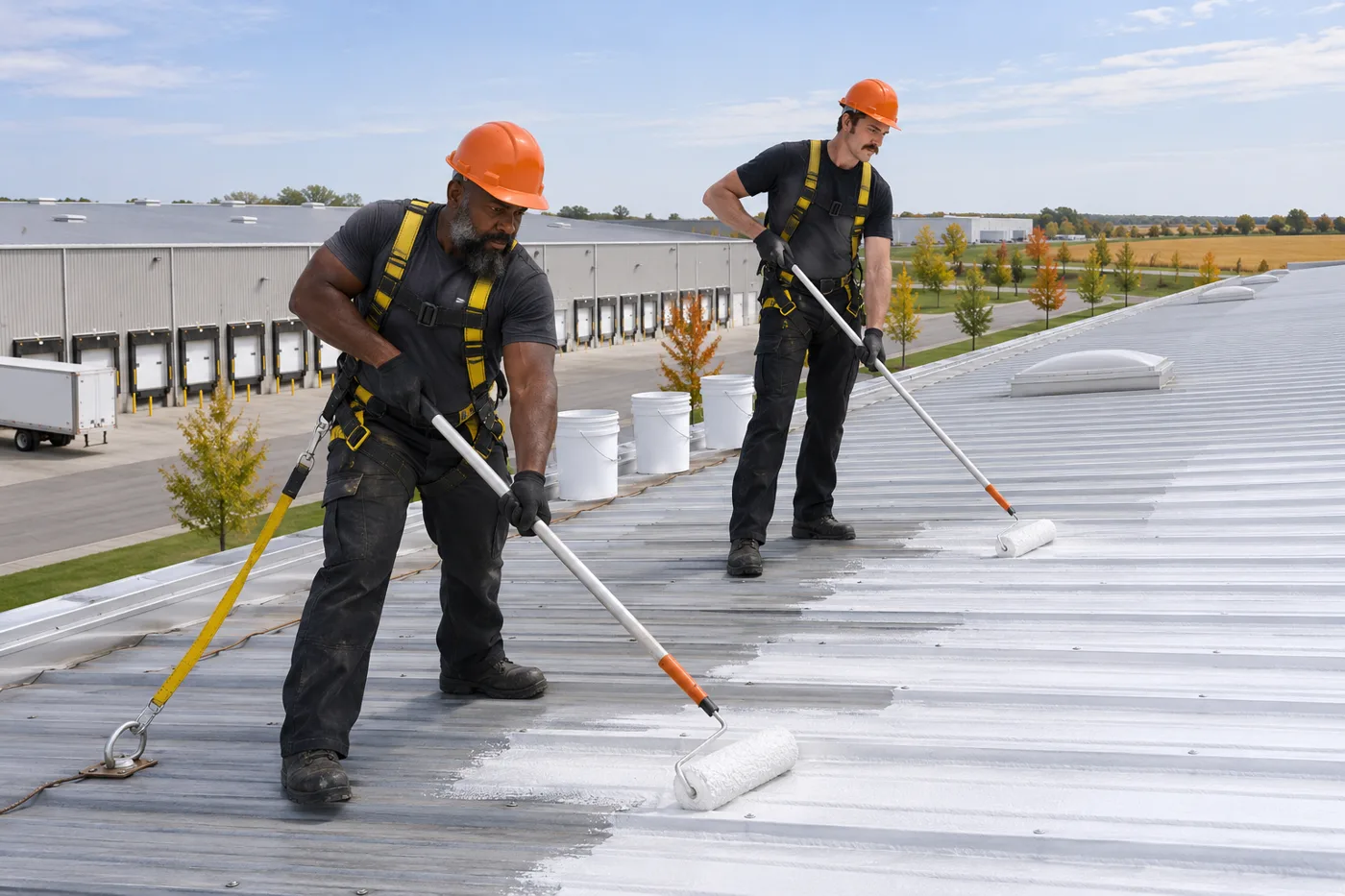
Office roofs with steep panels that drain fast can take acrylic coats, which recoat easily with more acrylic later.
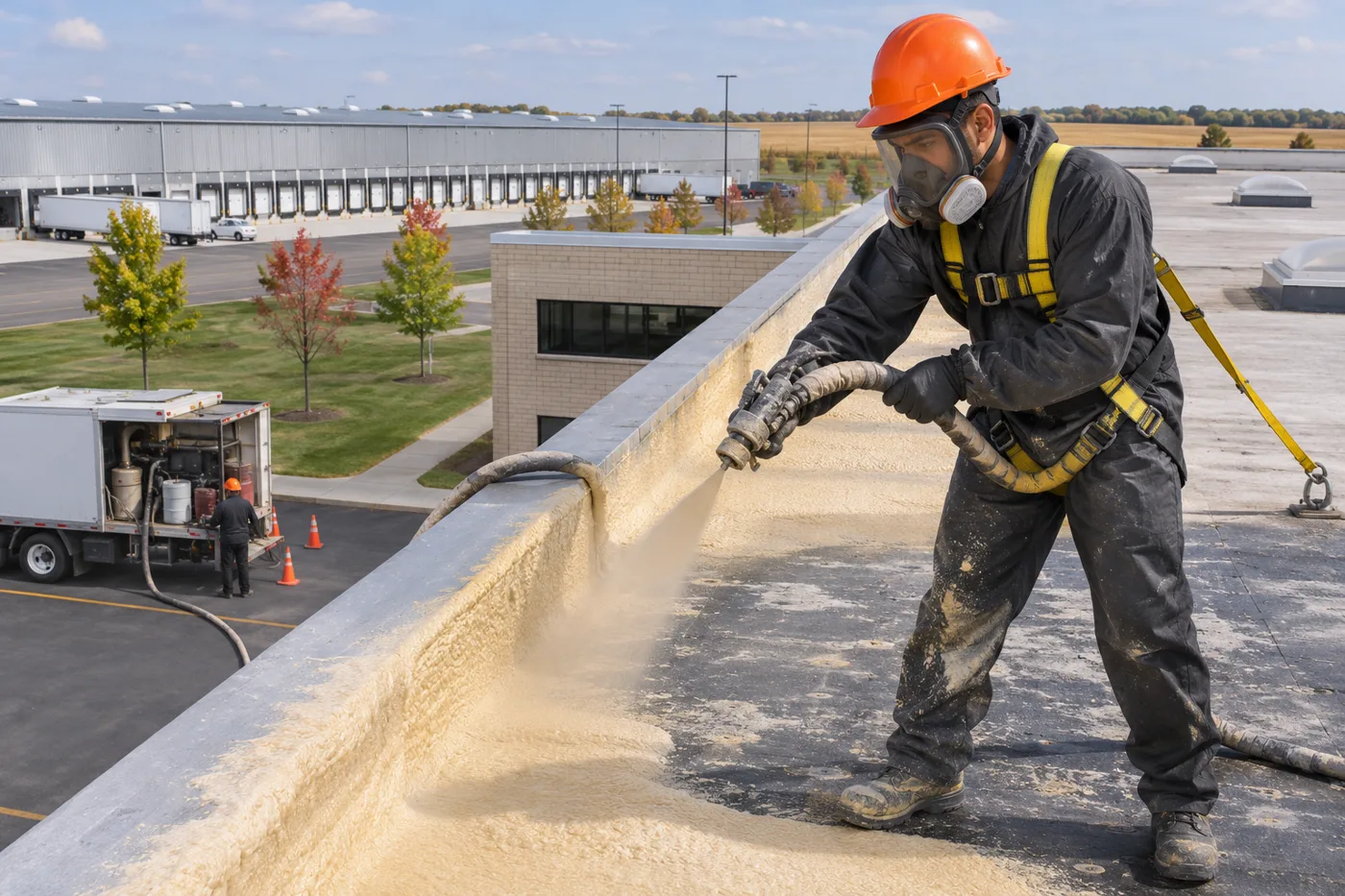
When panels sweat in winter or leak at hundreds of laps, foam over the steel adds insulation and covers every joint at once.
Answers on coating choice, durability, screws, and hail for commercial steel roofs.
Question about your own roof?
Call UsIt depends on slope, drainage, rust, and foot traffic on the roof. Silicone suits low-slope steel where water lingers, acrylic suits panels that drain fast, and a rust-inhibiting primer goes under either one on corroded metal. We choose after a roof walk and an adhesion test instead of starting from a product.
A thick, high-solids silicone system often holds up longest on low-slope steel because sunlight and standing water wear it slowly. Film thickness matters more than the label, so we apply to the specified mils and take readings across the roof. Reinforced laps and sealed screws keep the film from splitting where the steel moves.
Screws are where exposed-fastener roofs leak most. Washers dry out and screws back out as the panels expand and shrink, and coating over a loose screw leaves a weak spot that opens again. We tighten or upsize loose screws, replace stripped ones, and seal each head before the base coat.
Often it is, once the damage is documented and repaired. Hail cracks paint, splits laps, and breaks screw seals even where dents look small. We photograph the damage, replace punctured panels, reseal screws and laps, then coat. If an insurance claim is open, have the adjuster see the roof before work starts.
Standing-seam roofs take coating well, but the prep is different. Their clips are hidden, so the work focuses on the seam tops, end laps, and trim, where most standing-seam leaks start. We seal those details with reinforced base coat and keep the coating flexible enough to move with the floating panels.
Repairs and prep take most of the time, and the coats themselves go on quickly. A typical warehouse roof needs a series of dry days for washing, screw work, and priming, then a few more for the coats. Weather sets the pace, and we give you a schedule before work starts.
Send the roof size and what you see on it, or call to book a roof walk in Plainfield.