Ponding Areas
Dirt rings on the deck show where water sits after rain. Those areas get the clearing of nearby drains first, then extra silicone thickness once the surface dries. Owners get a note of any sag that keeps water there.

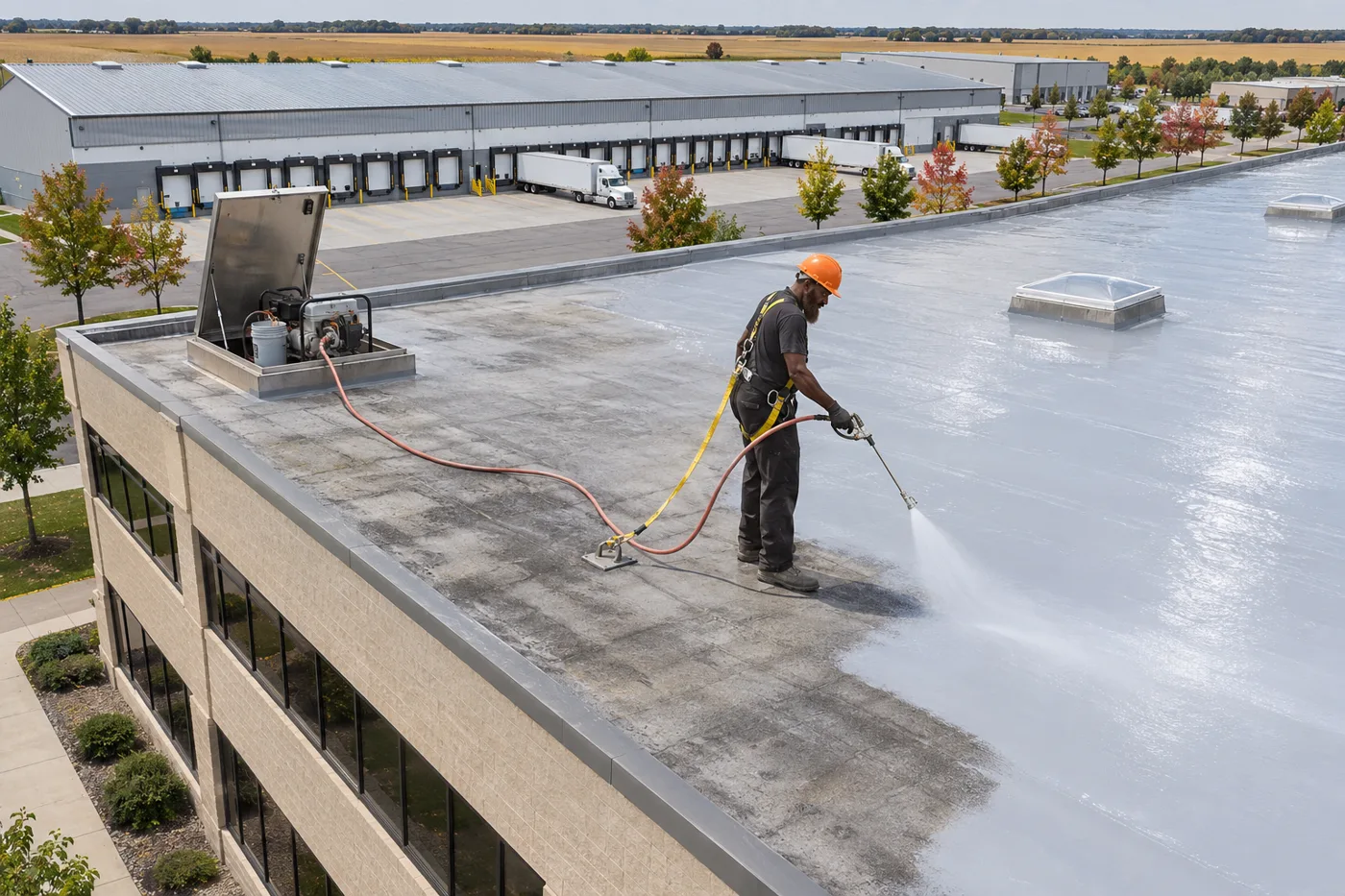
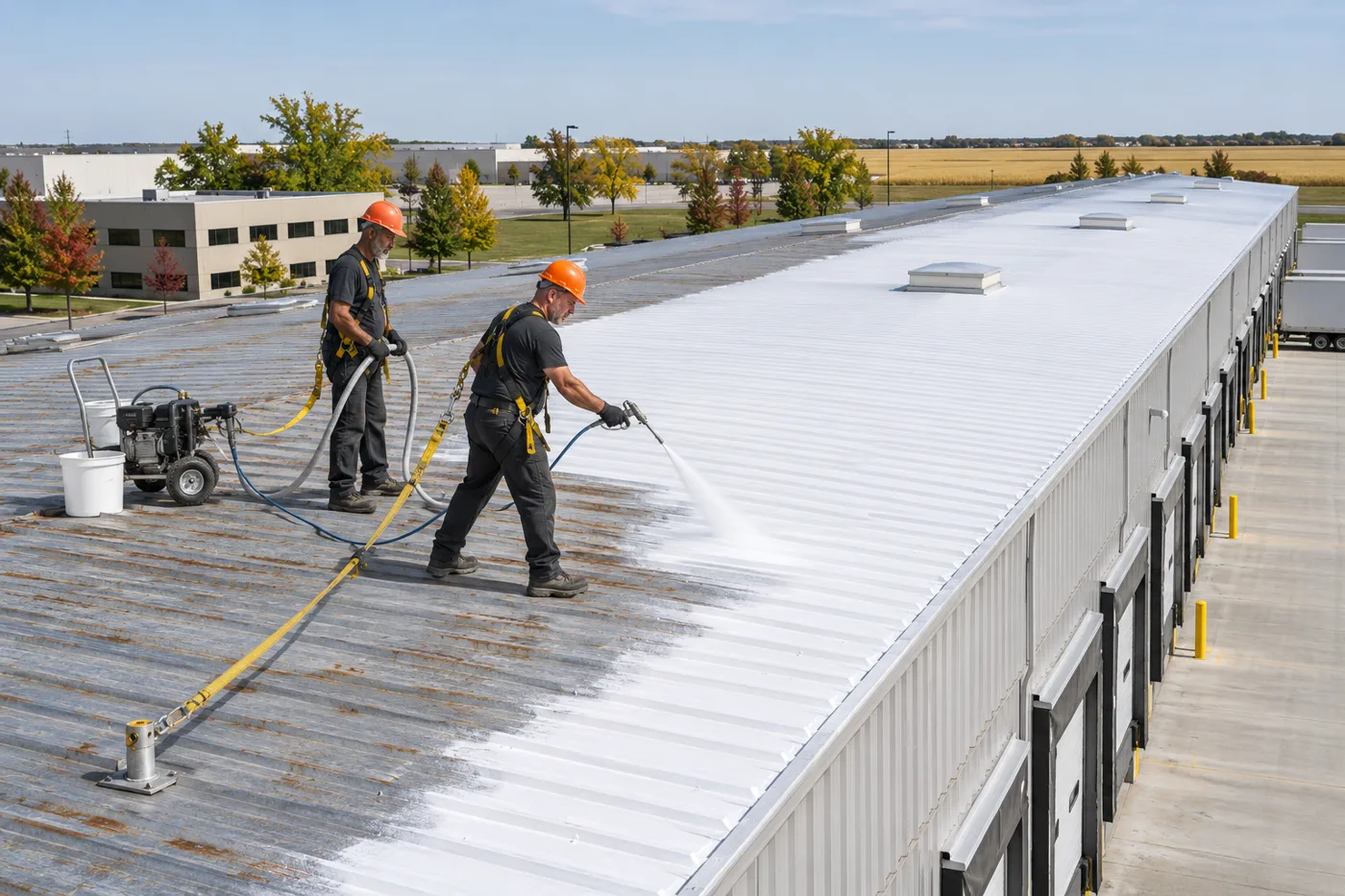
As a Plainfield silicone roof coating contractor, we clean, prime, and coat low-slope metal and flat roof sections where rain sits after a storm.
Plainfield silicone roof coating fits flat and low-slope sections best. Find the row that matches your roof.
| What You See On The Roof | Silicone System | Fix Drainage, Then Silicone | Another System |
|---|---|---|---|
| Rain sits two days after a storm | Sometimes | Usually Fits | Rarely |
| Low-slope steel with tight screws | Usually Fits | Sometimes | Rarely |
| Old acrylic coating peeling off | Rarely | Sometimes | Usually Fits |
| Wet insulation under the deck | Rarely | Rarely | Usually Fits |
| Heavy foot traffic to rooftop units | Sometimes | Usually Fits | Sometimes |
Half dots mean silicone fits after repairs or on part of the roof; drainage work comes first wherever water sits for days.
Silicone earns its place where water lingers. These five spots get the closest look.
Dirt rings on the deck show where water sits after rain. Those areas get the clearing of nearby drains first, then extra silicone thickness once the surface dries. Owners get a note of any sag that keeps water there.
Leaves, gravel, and loose debris choke drain bowls on flat roofs. We clear each strainer and check that clamping rings hold the old membrane down. A blocked drain is often the whole cause of ponding.
Rooftop units sit on curbs where flashing pulls loose over time. Corners get fabric and a heavy silicone base coat before the field coat. Units stay on their curbs throughout.
Seams on low-slope steel stay wet longer, so sealant fails sooner. Each seam is cleaned and covered with a reinforced strip of silicone. Fabric keeps the seam from cracking as the steel moves.
Standing water speeds rust on flat metal. Scale is wire-brushed and primed so the silicone bonds to clean steel. Primer under silicone stops rust from coming back.
Silicone is one of five systems; the right one depends on how each section of roof drains.
Pitched steel on the same building gets the full metal system.
Our pick for flat sections and slow drainage.
Better on slopes; lower material cost.
Can build slope where water won't drain.
Sloped shingle sections need their own coating.
Coating a flat or low-slope section with silicone avoids the tear-off and keeps water out at the seams.
| Factor | Coating The Roof | Tearing Off And Replacing |
|---|---|---|
| Standing Water | Silicone tolerates ponding after drains are cleared. | A new roof can add taper to drain water. |
| Disruption | Work stays on the roof; tenants keep working. | Old roof removed over the space below. |
| Price Range | About $2.50 to $4.00 per square foot. | About $5 to $8 per square foot. |
| Future Recoats | Recoated only with more silicone. | New system, new upkeep plan. |
| Dirt Pickup | Collects dirt; a wash restores reflectance. | Depends on the new surface. |
| Walkways | Walk pads or textured paths added. | New walkway pads with the new roof. |
Ponding usually means a blocked drain or a sag. Book a roof walk and we will find the cause before any silicone goes down.
Silicone only bonds to a clean, dry surface, so most of the work happens before the coating goes on.

We mark ponding areas, probe for wet insulation, and run an adhesion test patch. Areas with trapped moisture are cut out and replaced before coating.
Drain bowls, scuppers, and gutters are cleared and checked so water has somewhere to go. Any sag in the deck is noted for you separately.
Pressure washing removes dirt and diesel residue. Rusty steel is primed, and seams and curbs get fabric set in silicone.
Silicone goes on in one or two heavy passes to the specified mils, with extra thickness in spots that still hold water.
After the next good rain, low spots are checked to confirm the drains carry water away and the thicker coating covers what still collects.
Plenty of Plainfield buildings mix flat and pitched sections that need different products.
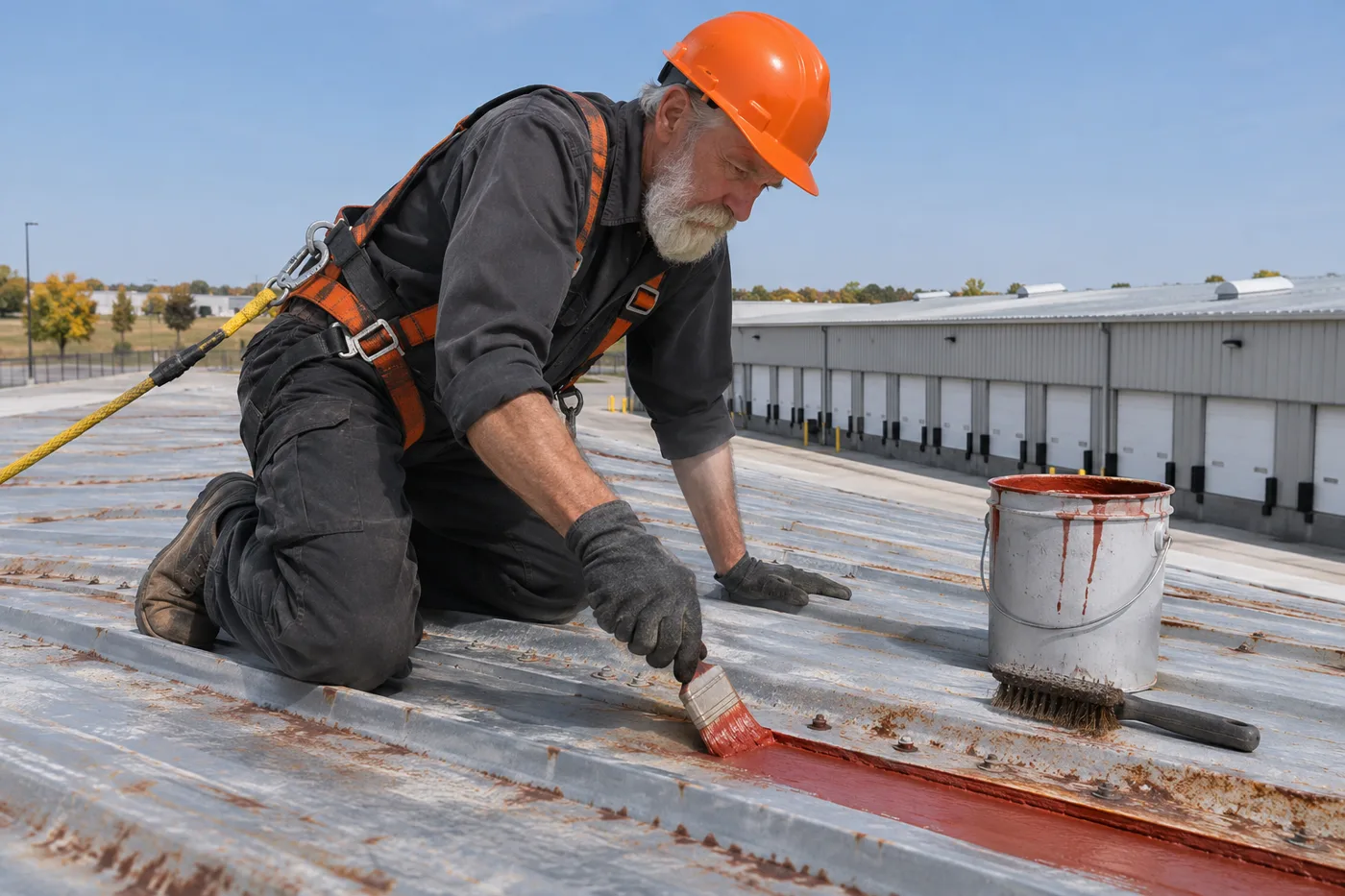
The pitched steel over the main warehouse gets the full metal restoration while the flat dock canopy gets silicone. Both systems go in one written scope with their own line items.
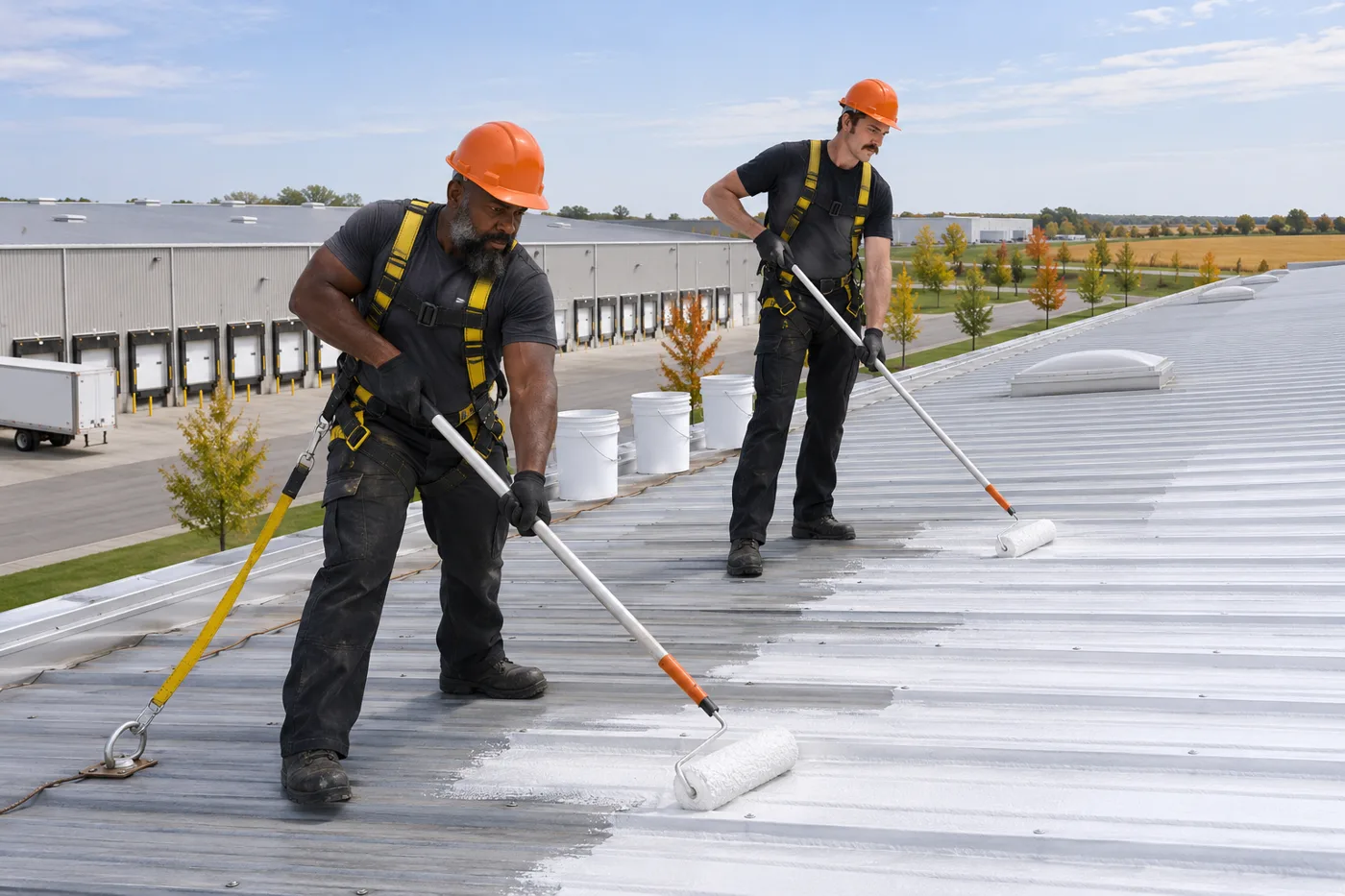
Steep office roofs that drain quickly can take acrylic, which costs less in material than silicone.
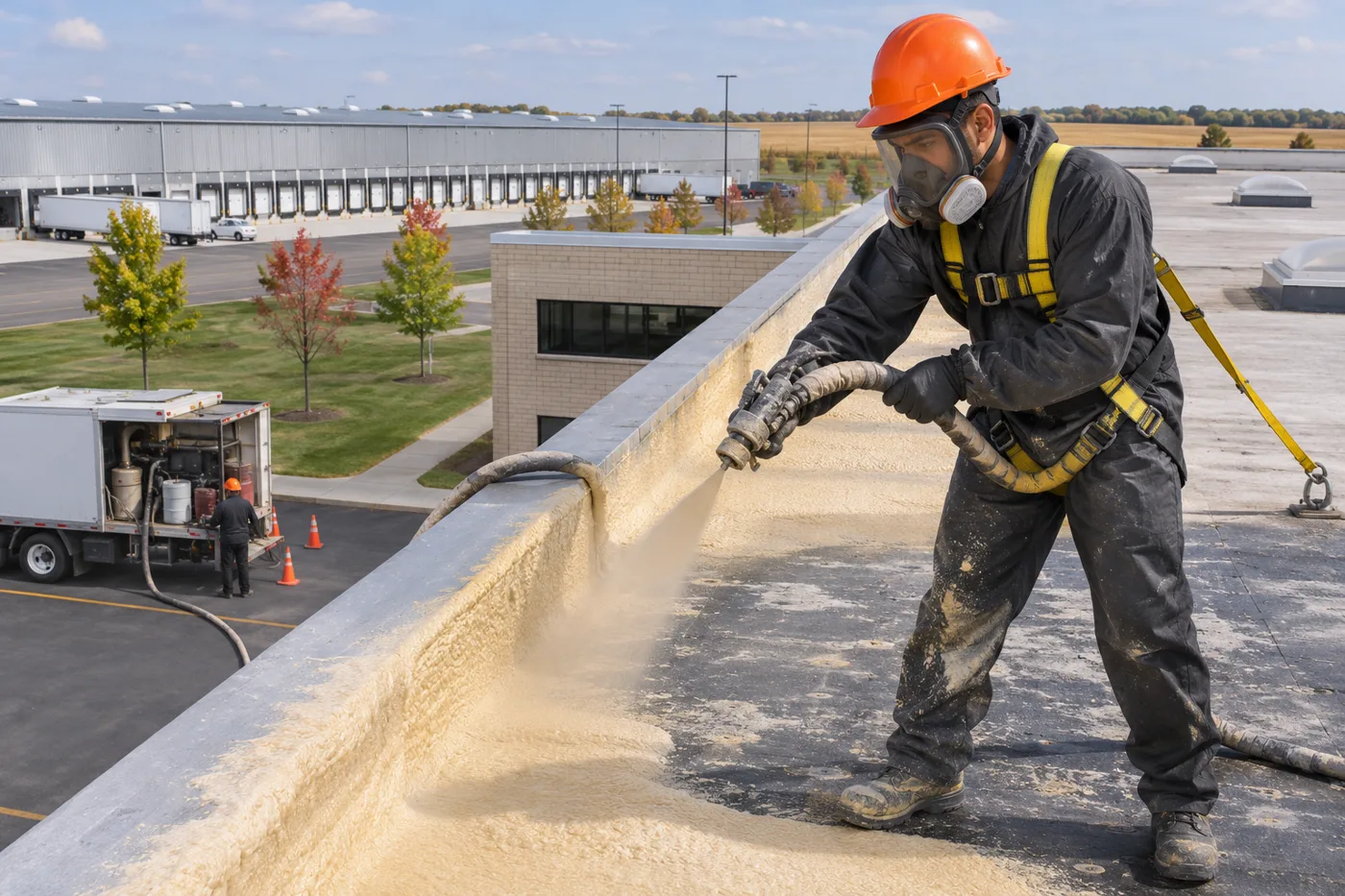
Where a flat roof will not drain, spray foam can build in slope before a silicone topcoat goes over it.
Straight answers about silicone on Plainfield warehouse, terminal, and office roofs.
Question about your own roof?
Call UsSilicone fits low-slope warehouse roofs because it handles standing water and sunlight. Acrylic fits pitched steel that sheds rain quickly and costs less in material. Silicone picks up more dirt and takes only silicone at the next recoat. How much water sits after rain usually decides it.
It works when the roof is washed and prepped and the silicone goes on at full thickness. On terminals it seals long runs of laps and screws in one film. Diesel exhaust leaves an oily film on these roofs, so we wash it off first because silicone needs a clean surface.
Ponding is something silicone tolerates, but the water stays until the drainage is fixed. Ponding on Plainfield metal roofs usually comes from blocked drains, full gutters, or sagging purlins. We clear the drainage, flag any sag, and coat only dry surfaces, with extra thickness where water still collects.
Cooler weather works for silicone, more than for acrylic, because it cures with moisture in the air. The roof still has to be dry and free of frost, dew, and ice, and the product minimum temperature applies. Late-fall work around Plainfield runs midday, after the frost burns off.
The product sheet sets the dry film thickness, and we build to it in one or two heavy passes. Thin spots wear through first, especially where water sits. We check wet film with a gauge as we go and add thickness on ponding areas and seams.
Wet silicone can be slick, so walk paths to rooftop units get walk pads or a textured finish. Service techs should stay on those paths, especially after rain or frost.
Tell us where water sits on your roof, or call to set up a walk in Plainfield.