Panel Ribs
Valleys between the ribs fill with foam, and the top builds into a smooth surface. Ribs are cleaned and loose screws secured before spraying. That makes a smooth surface for the topcoat.

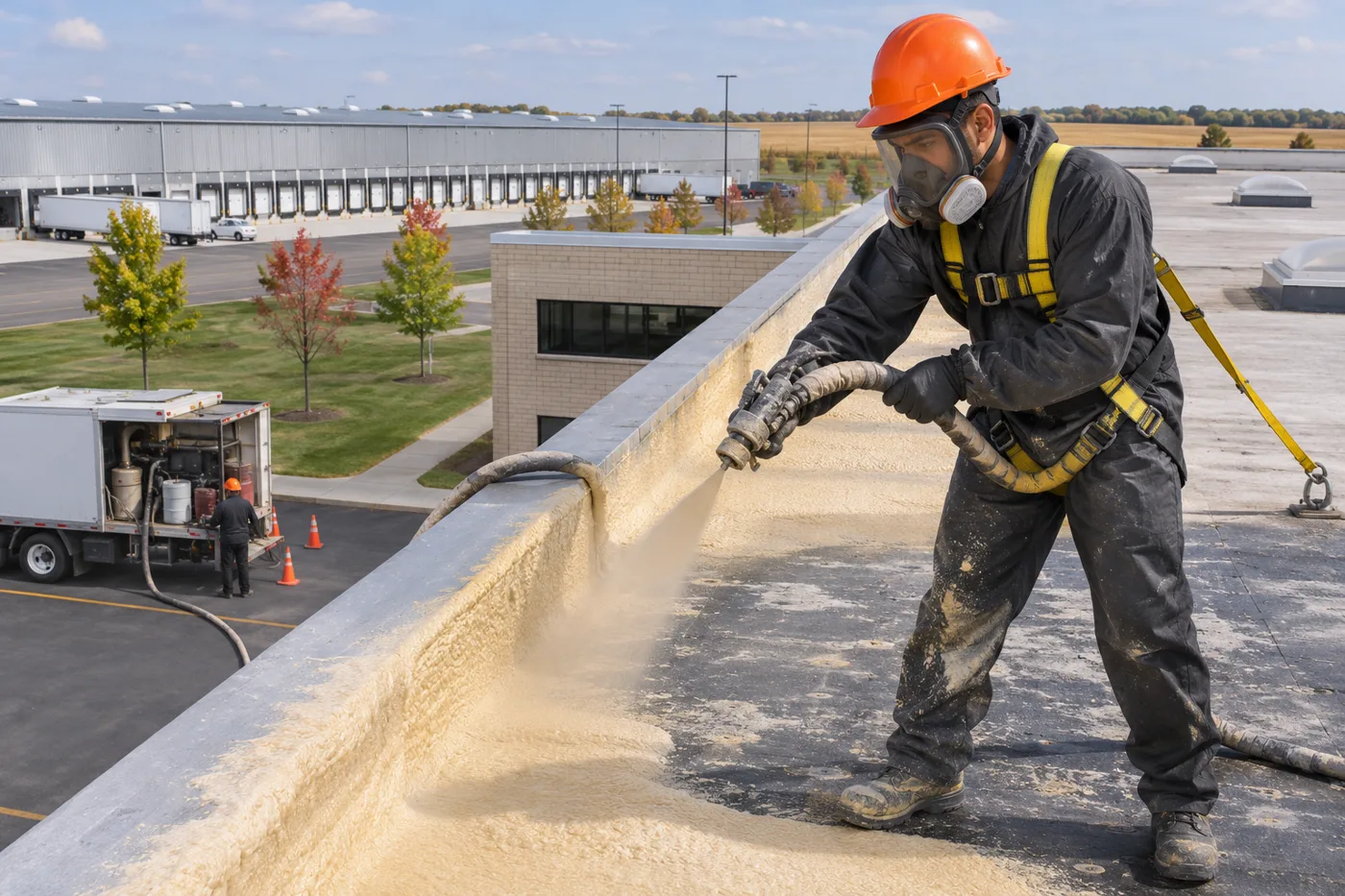
As a Plainfield spray foam roofing contractor, we spray closed-cell foam over metal and flat roofs, then cover it with a protective coating that keeps sun off the foam.
Plainfield spray foam roofing works over many roofs, as long as what is underneath is dry and solid.
| What You See On The Roof | Foam Over The Roof | Repair, Then Foam | Remove First |
|---|---|---|---|
| Metal roof leaking at hundreds of laps | Usually Fits | Sometimes | Rarely |
| Panels sweating inside in winter | Usually Fits | Sometimes | Rarely |
| Flat roof that holds water | Sometimes | Usually Fits | Rarely |
| Wet insulation under a membrane | Rarely | Sometimes | Usually Fits |
| Structure near its load limit | Rarely | Rarely | Usually Fits |
Half dots mean foam fits after repairs or once the wet areas are cut out and replaced with dry insulation.
These are the spots that get checked and prepared before foam goes down.
Valleys between the ribs fill with foam, and the top builds into a smooth surface. Ribs are cleaned and loose screws secured before spraying. That makes a smooth surface for the topcoat.
Condensation forms under cold steel in winter. Foam on top keeps the panels warmer and cuts that drip in many buildings. Fewer drips mean less damage to stock and equipment below.
Thicker passes in low areas build slope toward the drains, so water stops collecting on the flats. Water then moves off the roof instead of sitting.
Curbs and roof edges get foam carried up and over them, closing every joint. Edge metal is checked first so the foam stops cleanly. Foam stops short of weep holes and vents.
Air intakes and vents are masked and units shut down during spraying so overspray and fumes stay out of the building. Units are restarted only after the foam has set.
Foam is one system among five; some roofs need a coating only.
Coating alone when the steel just needs sealing.
A common topcoat over finished foam.
Another topcoat choice on sloped foam.
Our choice when laps leak everywhere.
Shingled sections need a separate coating.
Foam goes over the existing roof, which keeps the building closed while the roof is rebuilt on top.
| Factor | Coating The Roof | Tearing Off And Replacing |
|---|---|---|
| Old Roof | Stays in place under the foam. | Torn off down to the deck. |
| Insulation | Foam adds a continuous layer on top. | New boards installed under the new roof. |
| Joints | Laps and screws covered in one layer. | New laps and seams installed. |
| Weather Needs | Calm, dry days for spraying. | Dry days for tear-off and install. |
| Upkeep | Topcoat renewed over the years. | Seams and flashing checked over time. |
| Weight | Light foam layer over the roof. | New materials after tear-off. |
When there are too many leaks to chase one by one, foam can cover every joint. Get an estimate to see the range for your roof.
Foam jobs depend on dry surfaces and calm air, so prep and protection take most of the planning.
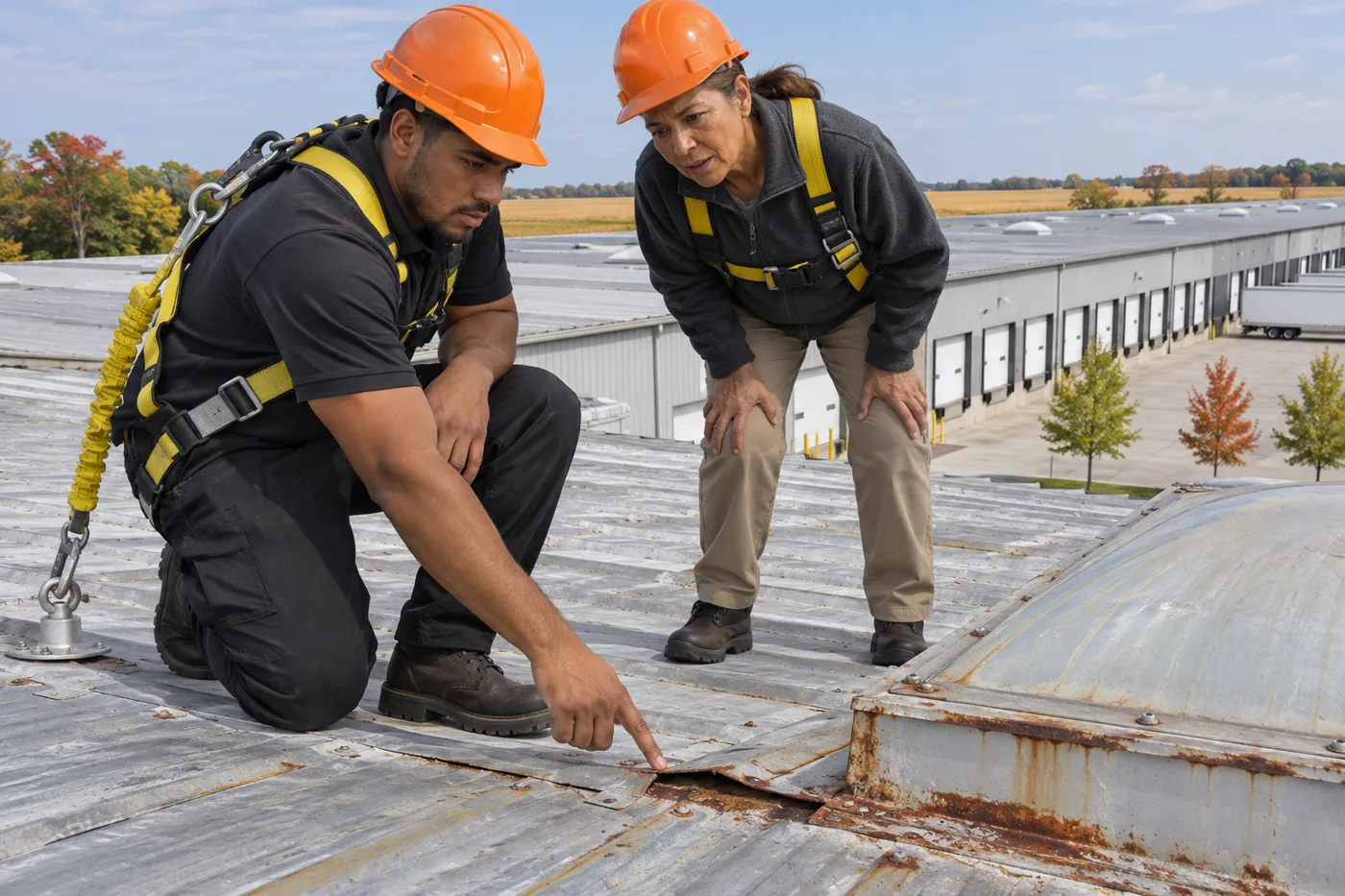
We check for wet insulation, test the deck, and confirm the structure can carry added weight. Air intakes, parking, and neighbors close to the building are noted for protection.
The roof is washed and dried, rust is treated, and loose screws are secured. Edges, curbs, and drains are prepared so the foam ends cleanly.
Closed-cell foam goes on in lifts to the planned thickness, thicker in low spots to build drainage. Wind screens and covers protect nearby vehicles.
A silicone or acrylic topcoat follows quickly, since sunlight breaks down bare foam.
Foam thickness is checked with a probe, and we look for soft or blistered spots, and confirm the topcoat covers the foam everywhere, including edges and curbs.
Every foam roof needs a topcoat, and the steel around it still needs attention.
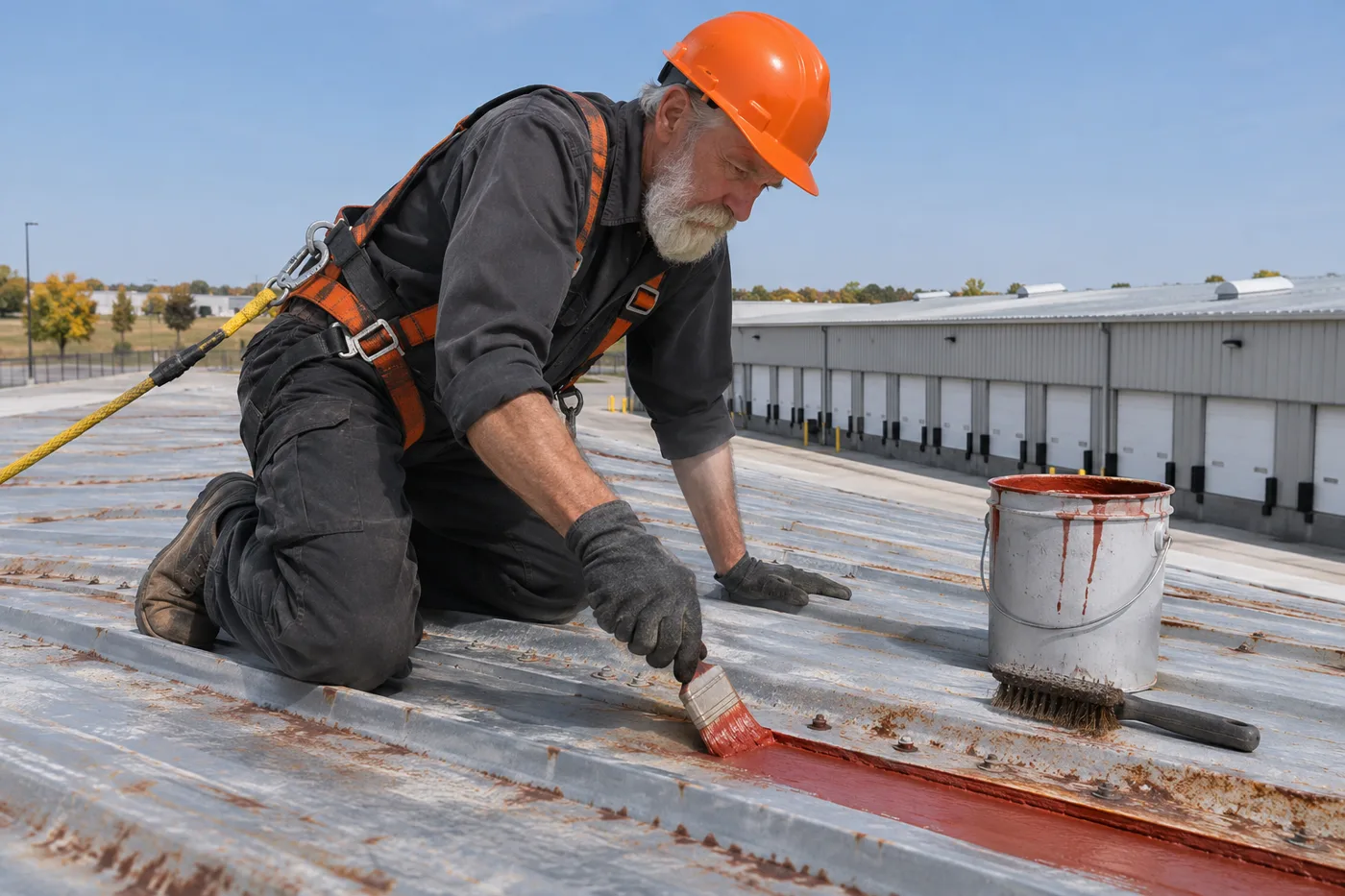
Steel sections left unfoamed, like canopies or lower roofs, get the standard metal coating system. Both systems go in one written scope with their own line items.
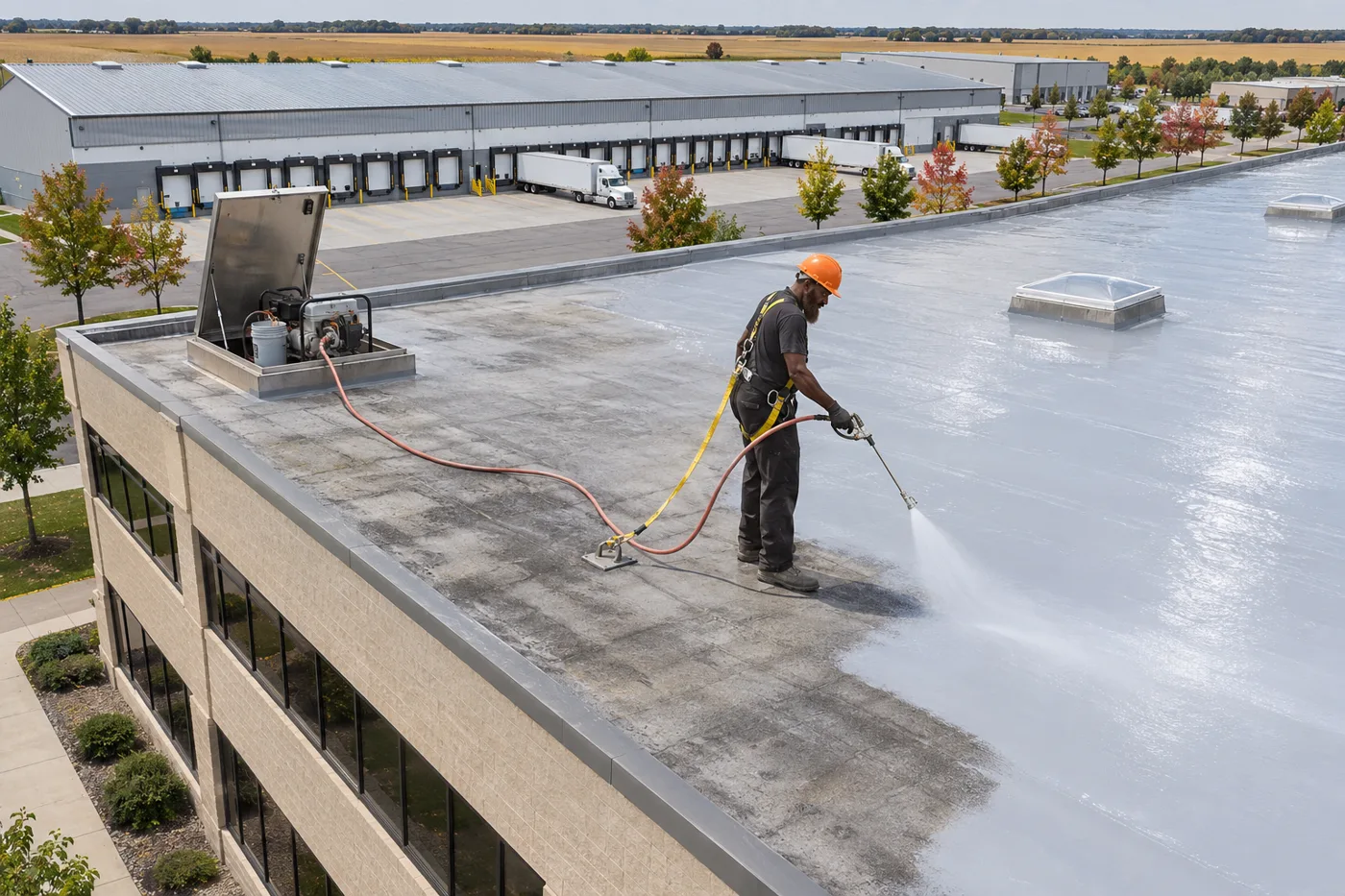
Silicone is the usual topcoat over foam on low slopes because it handles standing water.
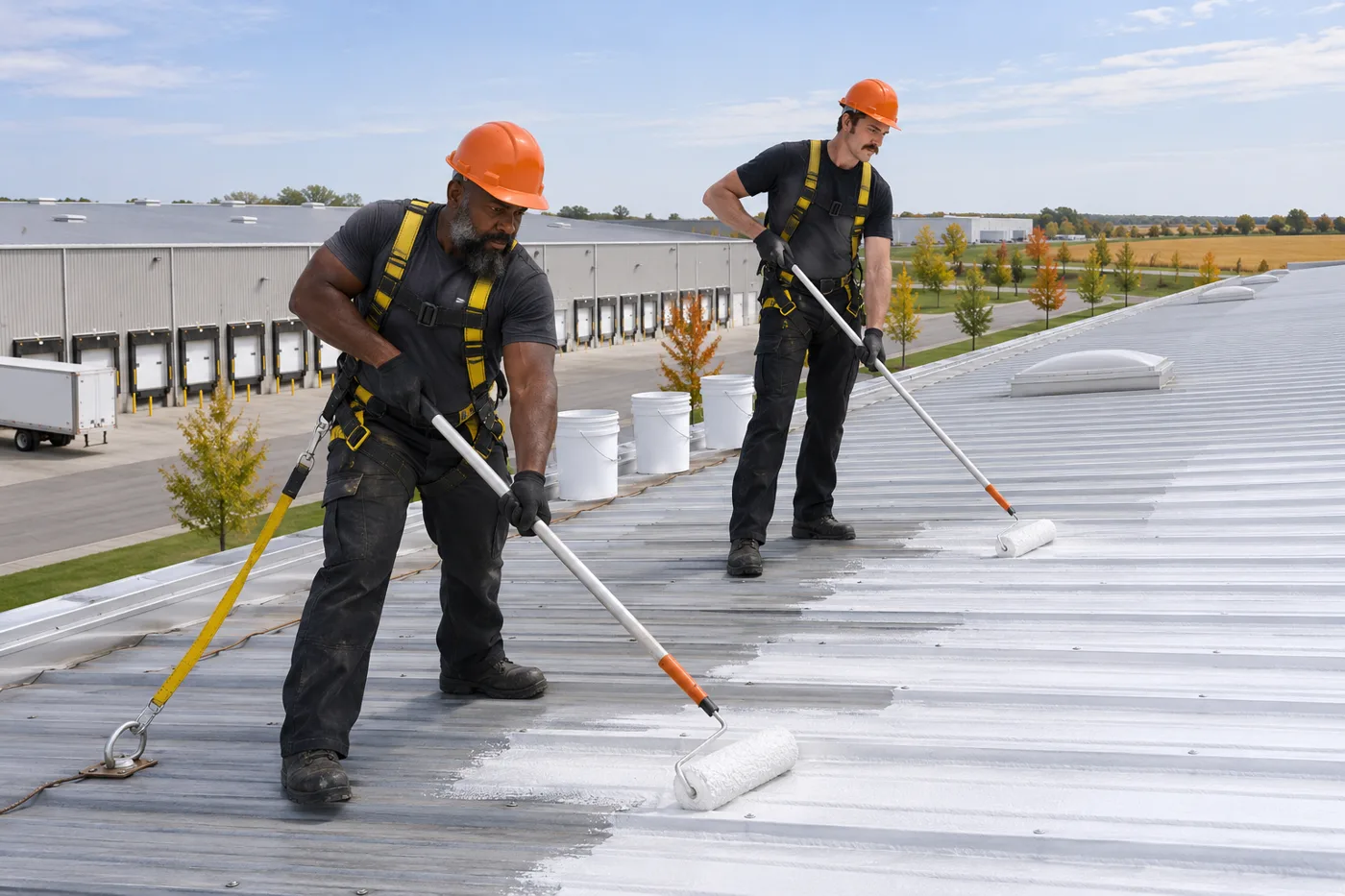
Acrylic is a lower-cost topcoat over foam on pitched sections that drain well.
Plain answers about foam on warehouses, terminals, and offices.
Question about your own roof?
Call UsOn the plus side, foam covers every joint, insulates, can be sloped to drain, and usually goes over the existing roof.
On the minus side, it needs calm, dry weather to install, its topcoat needs renewing over time, and hail or foot traffic can damage it. Warehouses with big heating or cooling loads gain the most.
Overspray near parked trucks and trailers, wind limits while spraying, and topcoat renewal over time are the main drawbacks. Terminals have busy yards right next to the building, so we use wind screens, cover vehicles, and spray on calm days. Foot traffic on the roof gets routed onto walk pads.
Yes. The panels are cleaned, rust is treated, and loose screws are secured, then foam fills the ribs and builds a smooth surface. A protective coating goes over it. The result covers every lap and screw and adds insulation without removing the steel, as long as the structure carries the added weight.
It does. Foam adds a continuous insulation layer on top of the roof with no gaps at screws or laps, which cuts heat loss in winter. It also reduces condensation under metal panels in many buildings. How much it helps depends on the foam thickness and the insulation already in place.
Wind screens go up at the roof edge, vehicles and nearby equipment are covered or moved, and spraying stops when wind picks up. Air intakes are shut and sealed so fumes stay outside. Someone watches the edges while the sprayer works.
Thickness depends on how much insulation the building needs and how much slope a flat area needs to drain. Thicker passes go into low spots, and the plan sets a minimum everywhere else. We measure as we spray.
Send your roof size and type, or call to talk through foam for your Plainfield building.