Panel Laps
Laps are cleaned and covered with a fabric-reinforced acrylic base so the thinner field coats bridge a closed joint. That base keeps the finish coats from splitting at the lap.

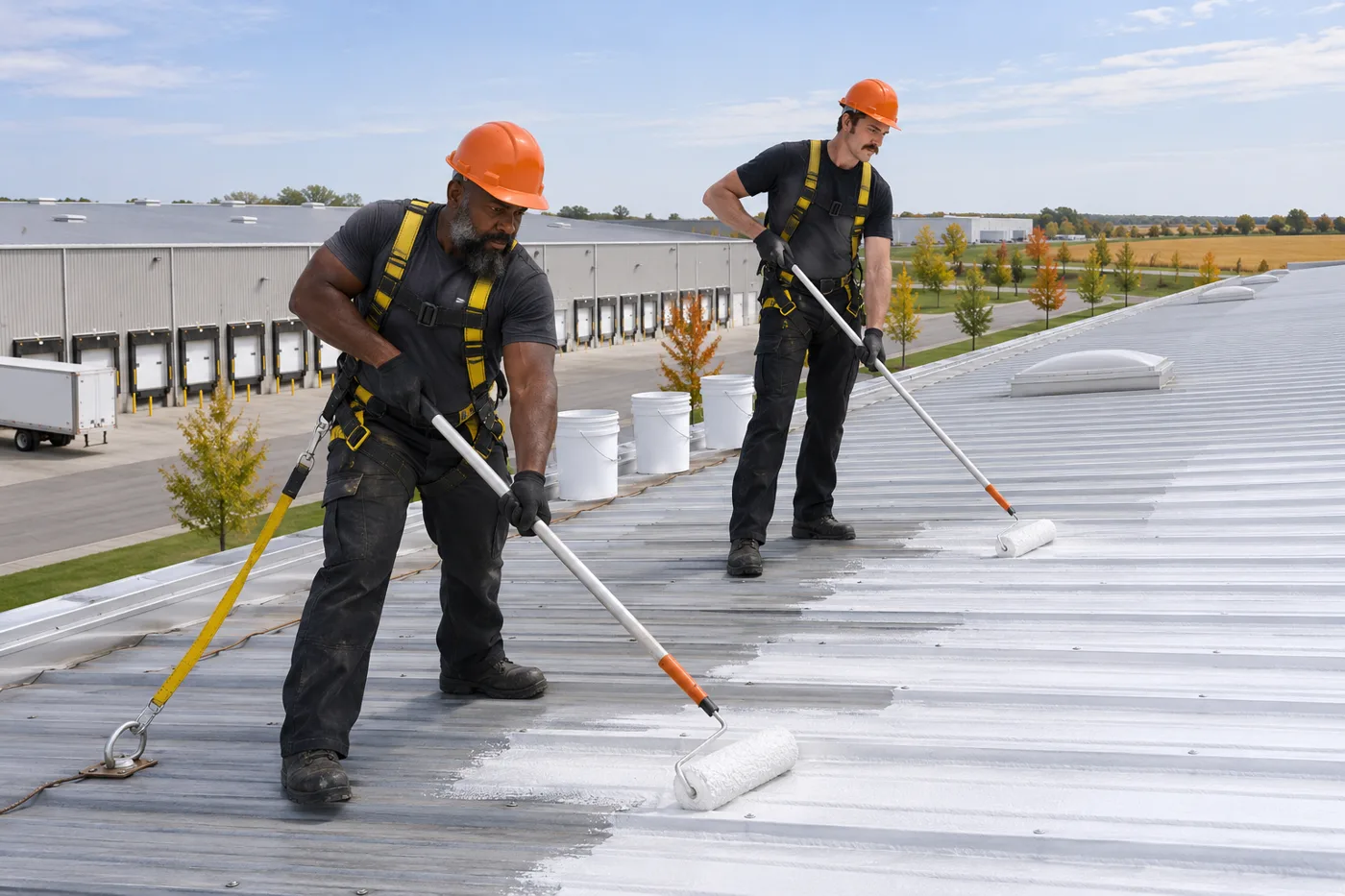
As a Plainfield acrylic roof coating contractor, we roll and spray water-based coats on sloped metal roofs that shed rain quickly, timed for dry, mild weather.
Plainfield acrylic roof coating needs a roof that drains. Check your roof against these rows.
| What You See On The Roof | Acrylic Coats | Repairs, Then Acrylic | Different System |
|---|---|---|---|
| Pitched steel that drains in minutes | Usually Fits | Sometimes | Rarely |
| Faded, chalky factory paint | Usually Fits | Sometimes | Rarely |
| Water standing behind rooftop units | Rarely | Sometimes | Usually Fits |
| Previous silicone coating | Rarely | Rarely | Usually Fits |
| Loose laps and dried screw washers | Sometimes | Usually Fits | Rarely |
Half dots mark roofs that take acrylic only after repairs or on the sloped sections, with another product on the flats.
Acrylic is thinner than silicone, so these details get reinforced first.
Laps are cleaned and covered with a fabric-reinforced acrylic base so the thinner field coats bridge a closed joint. That base keeps the finish coats from splitting at the lap.
Each screw head is tightened or replaced and sealed. Acrylic film is too thin to cover a screw that is still moving. Sealed heads sit flat under both finish coats.
South-facing slopes chalk and fade first. We wash off the chalk so the primer and first coat grip the panel. North slopes get the same wash even when they look clean.
Low spots behind rooftop units can hold water, which acrylic does not tolerate. Those spots get a water-tolerant product instead. The scope shows which spots get which product.
Rib tops and eaves rust where paint wore thin. Scale is brushed off and a rust-inhibiting primer goes on first. Rib tops get a second look after priming.
Acrylic covers the sloped steel; other systems handle sections that drain slowly.
The base restoration acrylic coats go over.
Spots behind units where water sits.
Our choice for pitched steel that drains.
Adds insulation where panels sweat.
Shingled offices beside the metal shop.
Acrylic coats bring a worn, sloped metal roof back without removing it.
| Factor | Coating The Roof | Tearing Off And Replacing |
|---|---|---|
| Fit | Pitched steel that sheds water fast. | Steel rusted through or failing structure. |
| Material Cost | Lower than silicone per gallon. | New panels, trim, and screws. |
| Price Range | About $2.50 to $4.00 per square foot. | About $5 to $8 per square foot. |
| Recoats | Takes more acrylic easily later. | Fresh roof, fresh maintenance plan. |
| Interior Heat | White finish cuts sun load on the steel. | Depends on panel color and insulation. |
| Color | White or a light color to cut heat. | Color chosen from the panel maker. |
Acrylic needs dry, mild days to cure. Get an estimate now and the job can be scheduled for the right weather window.
Acrylic work is scheduled around the forecast, so each stage is planned to finish in daylight.
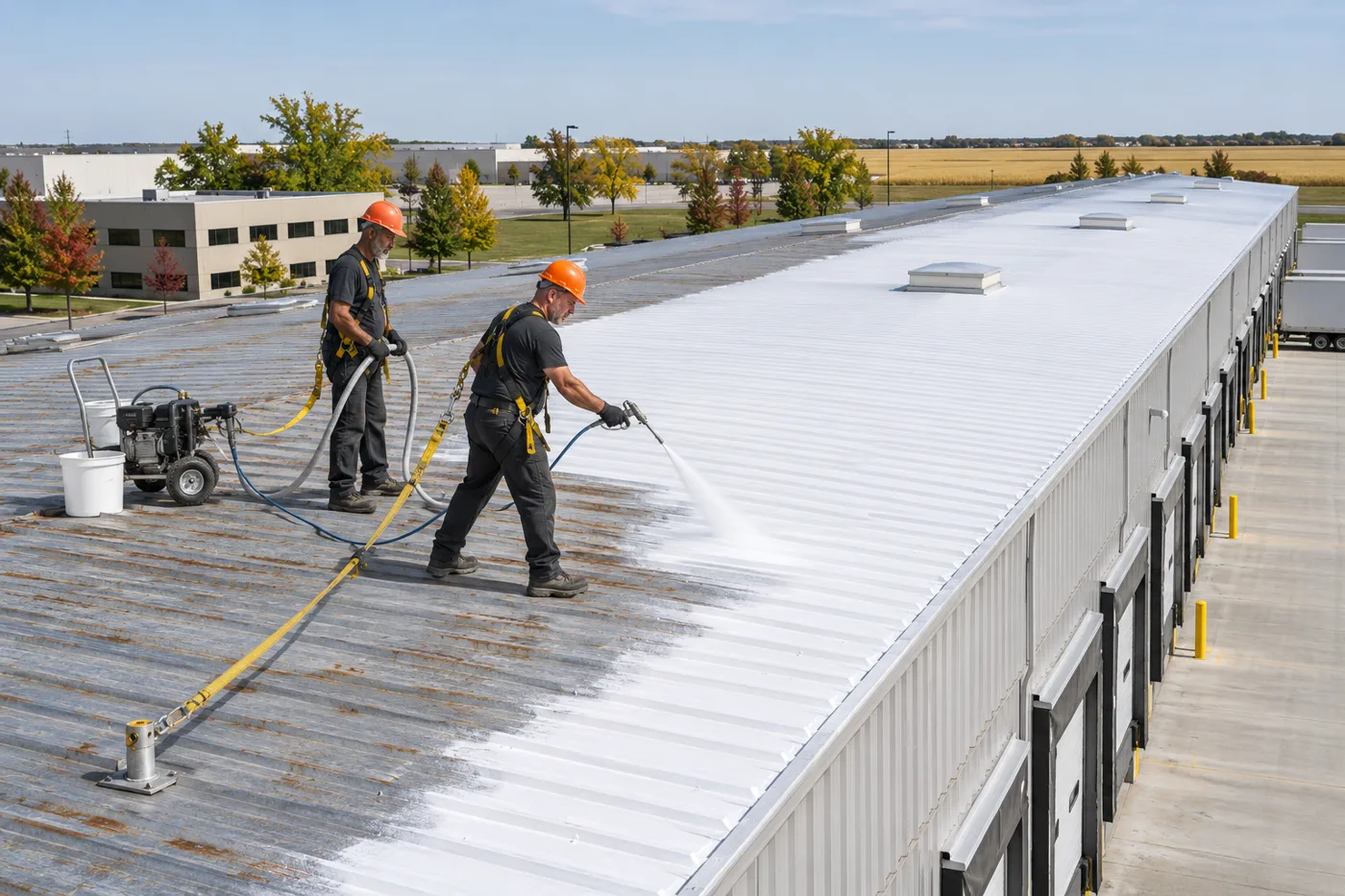
We confirm the roof drains, check every lap and screw, and look behind units for water. An adhesion patch tells us which primer the panels need.
Loose screws are replaced and sealed, laps are cleaned, and fabric goes into an acrylic base over each joint.
Chalk and dirt come off with a pressure wash. Bare and rusty steel gets primer, and the roof dries fully before the first coat.
Contrasting colors show full coverage on the first and second coats. We measure film thickness as each coat goes down.
Thickness readings on each slope confirm both finish coats reached the target, and any thin area gets another pass before we leave the roof.
Acrylic often covers the sloped steel while another product handles the flat or shingled parts.
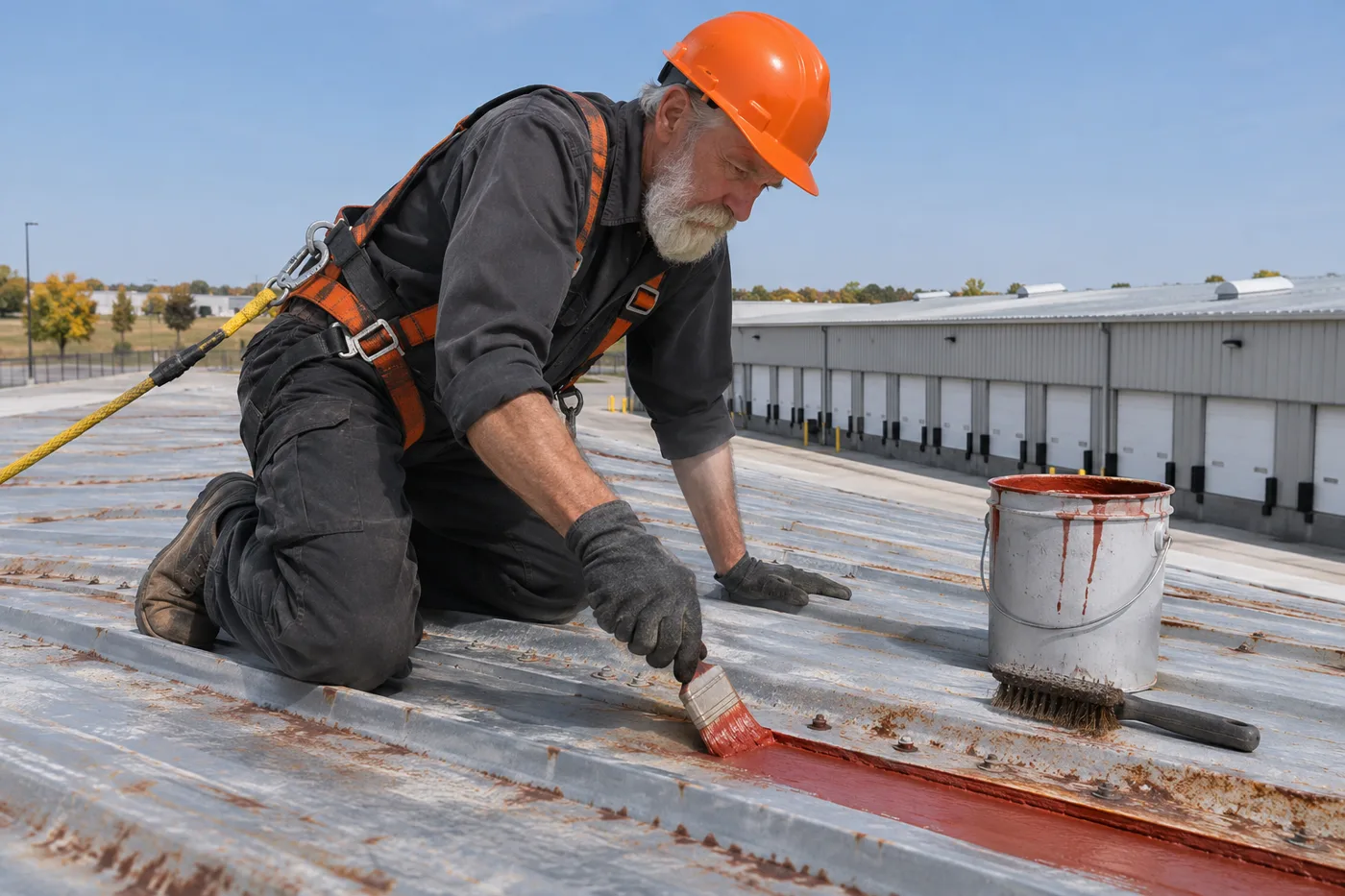
Screw sealing, lap repair, and rust priming from the metal restoration come before any acrylic coat. Both systems go in one written scope with their own line items.
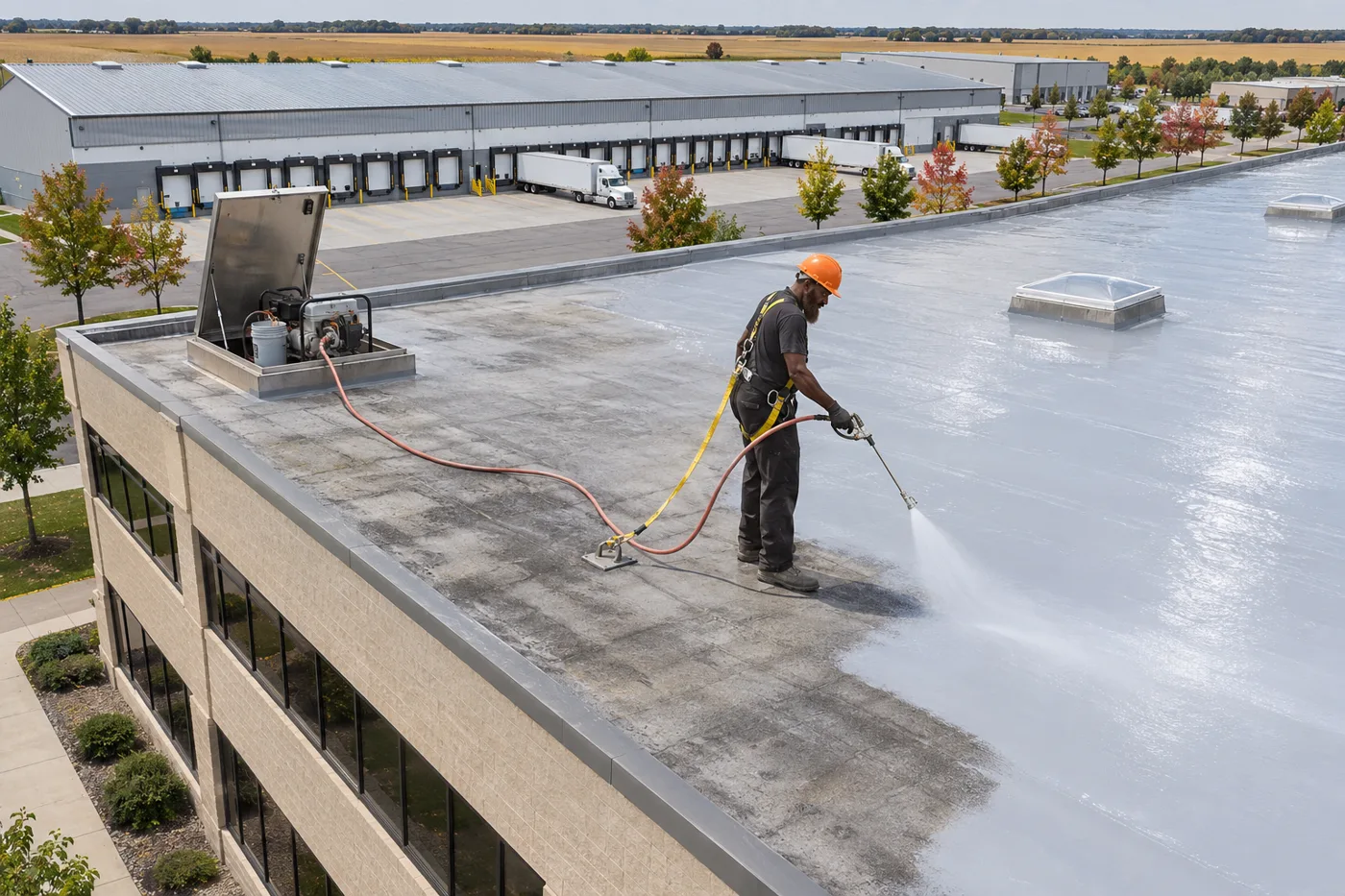
Flat sections behind units or along a dock wall that hold water get silicone instead of acrylic.
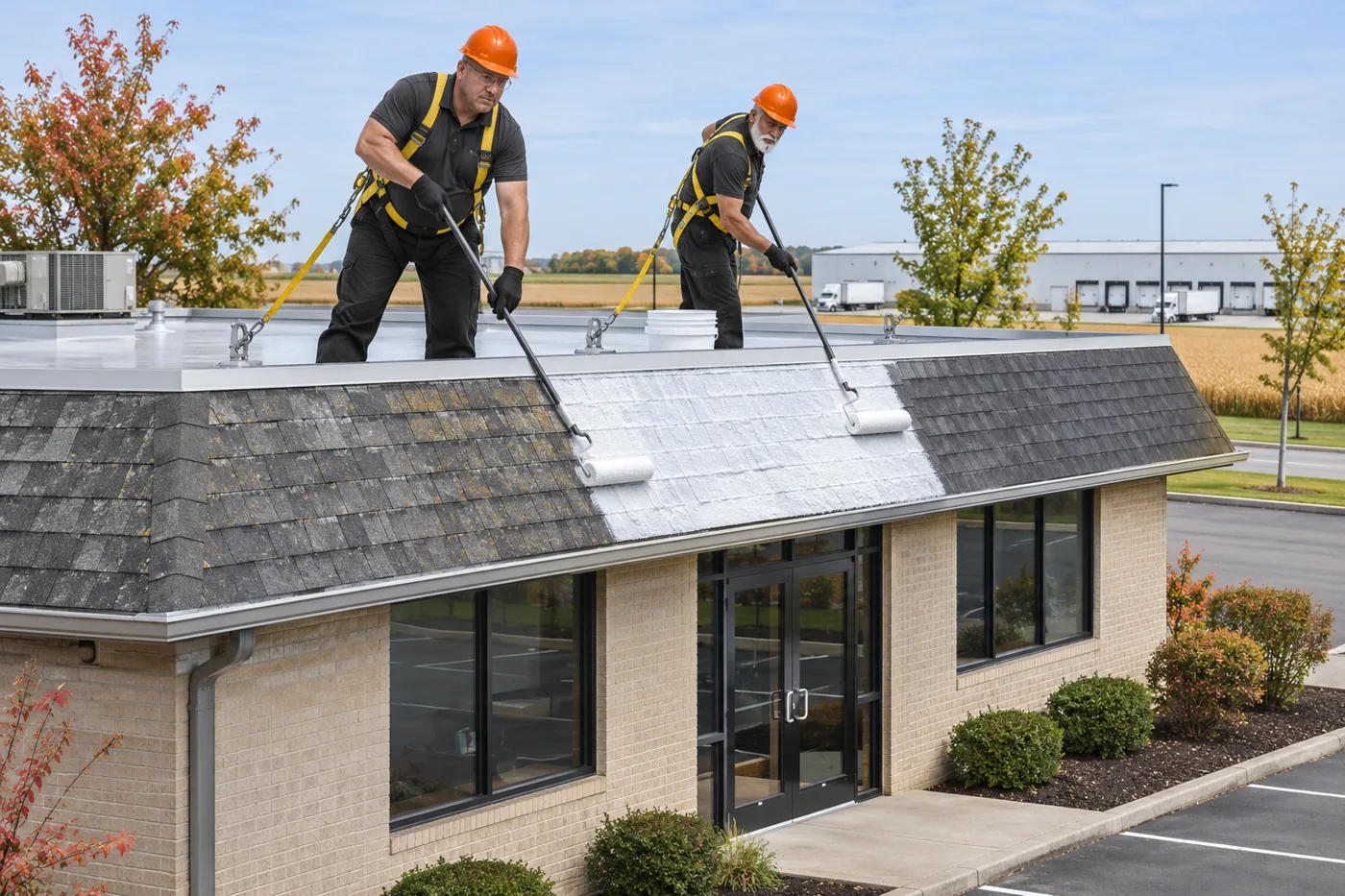
A shingled office or front entry on the same property gets a coating made for asphalt shingles.
What owners ask about coats, cure times, and weather limits for acrylic.
Question about your own roof?
Call UsMost acrylic systems use a primer on rusty or bare steel, a reinforced base coat at laps and screws, and two finish coats.
The finish coats often go on in contrasting colors so full coverage is easy to see. The target is the dry film thickness on the product sheet, and we gauge it as we work.
On office roofs with sloped steel that drains well, yes. Acrylic seals laps and screws, reflects sunlight, and cuts heat reaching the offices below. Water that sits behind rooftop units is where it struggles, so those spots get a water-tolerant coating and the call is made section by section.
Each coat usually dries to the touch in a few hours in warm, dry weather and takes longer to cure fully. Humidity, cool air, and short days stretch that time. Rain before the coat skins over can wash it off, so we only start on dry forecasts with enough daylight left.
The product sheet lists a minimum air and surface temperature that must hold through the drying period. Around Plainfield, spring and fall afternoons can be warm while evenings drop below that line, and dew forms early. We start once the roof is dry and stop in time for each coat to set.
Lower material cost and easy recoats are the main reasons. On steel that drains in minutes, water never sits long enough to need silicone. Acrylic also stays cleaner and can be recoated with more acrylic years later without stripping the old film.
Acrylic bonds to sound older acrylic once it is washed and tested. It does not go over silicone, which only takes more silicone. We run an adhesion patch on any previously coated roof before choosing.
Send your roof size and slope, or call to book an acrylic coating walk in Plainfield.